Alternative Medicine › Herbs Wholesale
Wholesale Herb Pricing: What Drives Cost and When Cheap Is a Warning Sign
Every retail buyer in the natural-products trade has a version of the same story. A new supplier's quote lands 30 percent under the incumbent's. The samples look fine. The first shipment sells. Then a customer returns a jar because the color is wrong, or a formulator's assay comes back at half the labeled potency, or — the nightmare version — a regulator's test finds lead, or a species that was never supposed to be in the building. The savings evaporate into a recall, a chargeback, and a reputation conversation you cannot un-have.
Wholesale herbs are not a commodity like sugar. They are an agricultural product with a chemistry problem: the same Latin name can hide a fivefold range in active compounds, and the global supply chain passes through enough hands to make substitution profitable and detection somebody else's job. This directory lists 969 businesses under Herbs Wholesale and 291 under Herbs Retail — a deep bench of suppliers, which is precisely why price dispersion is so wide. This guide breaks down what actually drives a legitimate wholesale price, what a too-cheap quote is usually telling you, and the documentation routine that separates buying from gambling.
The anatomy of an honest price
A defensible per-pound price is a stack of costs, and knowing the stack lets you see which layer a discount is coming out of.
The plant itself. Species, plant part, and growing method set the floor. Roots and barks of slow-growing plants cost more than leaves of fast ones; wildcrafted material carries the labor of finding and gathering it, plus the sustainability premium that responsible collectors charge; a difficult harvest year in the origin country reprices the whole category. Most bulk botanicals originate in a handful of regions — India, China, and Egypt are primary source regions for the trade, with South American origins significant for certain species — so weather, export policy, and currency in a few places move your quote in Ohio.
The form. Whole herb is cheapest to produce and keeps longest, because intact plant material protects its own chemistry. Cut-and-sifted costs more (labor, loss to fines). Powder costs more again — and loses the visual identity that lets you verify what you bought. Extracts are a different economy entirely: a 4:1 extract consumed four kilos of raw material per kilo of product, and a standardized extract, guaranteed to a marker-compound percentage and verified by HPLC, carries the lab cost in every lot. When two "turmeric extracts" differ by half in price, you are usually not looking at two margins. You are looking at two different products wearing one name.
Certification. USDA Organic material commands a premium — one bulk extract supplier puts organic-certified extracts at 15–25 percent above conventional — because certification is a chain of audits from farm to warehouse, not a sticker. Kosher, halal, and non-GMO verification each add their own audit layer.
Testing. This is the layer buyers most often unknowingly negotiate away. A full quality panel on a lot — identity confirmation, heavy metals, microbial counts, pesticide residues, potency where applicable — costs real money per lot, and a supplier testing every lot, with lot-specific certificates of analysis (COAs), has built that cost into the price. A supplier who tests "representative" lots, or once a year, or not at all, can quote lower while selling you the same apparent product. More on this below, because it is where cheap turns dangerous.
Logistics and scale. Tiered pricing is normal: larger orders earn better per-pound rates, and minimum order quantities in the trade range from a few pounds for specialty items to 500 pounds or more for common botanicals. Freight, warehousing, fumigation or pathogen-reduction treatment, and the cost of capital sitting in a warehouse are all in the number. A modest discount for volume is arithmetic. A dramatic discount for this lot, right now is a story you should ask to hear in full.
Why the cheapest bid so often fails QC
The Botanical Adulterants Prevention Program (BAPP) — a consortium of the American Botanical Council, the American Herbal Pharmacopoeia, and the University of Mississippi's National Center for Natural Products Research — exists because adulteration of botanical ingredients is not rare, theoretical, or historical. Its most cited recent review, published in Natural Product Reports in 2024, compiled 78 publications covering 2,995 samples of five top-selling botanicals and found 818 samples adulterated or mislabeled: ginkgo leaf at 56.7 percent of samples, black cohosh rhizome at 42.2 percent, echinacea at 28.5 percent, elderberry at 17.1 percent, and turmeric at 16.5 percent. The authors caution that these rates cannot be extrapolated to the whole market — and note, pointedly, that products sold as licensed herbal medicines in regulated markets were found authentic, while the failures concentrated in the loosely regulated supplement channel. ABC's Mark Blumenthal has estimated that 35–45 percent of herbs in top-selling categories are potentially subject to contamination or intentional adulteration.
Understand the economics and the numbers stop surprising you. Adulteration is mostly economically motivated: a cheaper species substituted for a dearer one, an extract spiked with synthetic or plant-derived marker compounds to pass a potency test it would otherwise fail, exhausted material (already extracted once) sold as fresh, dyed or weighted product. Every one of those frauds produces exactly one market signal before it produces a lab result: a price the honest stack cannot support. The fraudster's margin is the discount. When a quote for a high-demand, frequently adulterated botanical — ginkgo, black cohosh, elderberry in a shortage year — comes in far under the field, the statistically likely explanations are substitution, dilution, spiking, or skipped testing. "We found a more efficient supplier" is possible. It is just not the way to bet your label.
The second failure mode is quieter: contamination rather than fraud. Dried herbs carry microbial loads from the field; the FDA's risk profile of imported spices found roughly 1 shipment in 15 (about 6.6 percent) positive for Salmonella and about 12 percent containing filth such as insect parts or hair. Heavy metals accumulate from soil: when Consumer Reports tested 126 dried herbs and spices in 2021, about a third had combined arsenic, lead, and cadmium levels it considered concerning for regular consumption by children — and organic certification did not reliably predict lower levels. None of this is visible, smellable, or priced on a quote sheet. It is managed, or not, by treatment and testing — the very line items a rock-bottom quote tends to omit.
The documentation routine that replaces trust
Professional buyers do not trust suppliers; they verify them, on paper, per lot. The routine is not exotic:
| Document / check | What it proves | Red flag |
|---|---|---|
| Lot-specific COA, recent | Identity, potency (if applicable), heavy metals, microbials, pesticides for this lot | A generic COA, an old date, a COA for a different lot, results without methods or limits |
| Identity testing method | The lab can actually distinguish the species — supplement rules (21 CFR 111.75) require at least one appropriate identity test per ingredient | "Organoleptic only" (look/smell) for powders and extracts, where the eye cannot verify |
| Botanical name + plant part + origin + lot number on every unit | Traceability: a problem can be followed back to a batch and recalled | Common name only; no lot coding; origin described as a continent |
| Organic certificate naming the certifier | The claim is audited, current, and covers this material | A logo without a certificate; a certificate for a different entity in the chain |
| Supplier's adulteration posture | Awareness of BAPP bulletins for the botanicals you buy; a destruction policy for defective lots | Blank looks when you name the known adulterants of your category |
| Your own intake check | Samples before commitment; sensory check on arrival; periodic third-party spot assays | A supplier who resists samples or your independent testing |
Two practices deserve emphasis. First, test identity like it matters, because regulators do: FDA warning letters have faulted botanical firms whose identity methods could not distinguish the labeled plant from unrelated species. For whole and cut herbs, trained macroscopic and microscopic examination goes a long way; for powders and extracts, you need chemical fingerprinting (HPTLC/HPLC) or DNA-based methods from a competent lab. Second, adopt the BAPP mindset on failures: the program's standard contract language lets buyers destroy "irreparably defective" material — contaminated, spiked, or wrong-species lots — at the supplier's expense, rather than returning it to be resold to a less careful buyer. Writing that clause into your purchase terms changes your supplier conversations immediately, and the suppliers who sign it without flinching are telling you who they are.
Negotiating without negotiating away the quality
Buyers under margin pressure will negotiate; the skill is choosing which line items are negotiable. Freight, payment terms, order consolidation, and volume tiers are all fair game — consolidating three botanicals into one shipment, or committing to a season's volume in exchange for tier pricing, saves real money that comes out of logistics rather than quality. What should never be on the table: the testing panel, the pathogen-reduction step, the certification chain, or the freshness of the lot. If a negotiation only closes when one of those quietly disappears, the price didn't improve — the product changed, and your label didn't. A useful discipline is to negotiate in the open: ask the supplier to itemize what a lower price removes. Honest suppliers answer with freight and margin. The answer you cannot accept is silence about testing, because in this trade the lab work is not overhead. It is the product's proof of identity, and a buyer who funds it is buying the only version of the herb they can actually stand behind.
When cheap is fine — and the buyer's bottom line
Cheap is not always a warning. Legitimate low prices exist: a bumper harvest, a common fast-growing leaf in season, a direct-import relationship cutting out a broker layer, a supplier clearing a well-documented lot near (not past) its prime, your own volume honestly earned. The distinguishing test is never the number alone; it is whether the discount survives documentation. Ask the cheap supplier for the lot COA, the identity method, the origin, and the certifier — and watch the temperature of the reply. An honest discounter produces paperwork at the same speed as the quote. A dangerous one produces stories.
That is the whole discipline, really. In a market where a 2024 review could find more than half of sampled ginkgo adulterated, price is information — and the buyers who treat a suspiciously low quote as a question, rather than a gift, are the ones whose shelves deserve the trust their customers place in them.
Sources
- Orhan, N., Gafner, S., and Blumenthal, M., "Estimating the extent of adulteration of the popular herbs black cohosh, echinacea, elderberry, ginkgo, and turmeric," Natural Product Reports (2024), via the ABC-AHP-NCNPR Botanical Adulterants Prevention Program — 78 publications, 2,995 samples, 818 adulterated or mislabeled; ginkgo 56.7%, black cohosh 42.2%, echinacea 28.5%, elderberry 17.1%, turmeric 16.5%; licensed herbal medicines in regulated markets found authentic. Summary at https://www.nutritionaloutlook.com/view/new-review-from-bapp-estimates-adulteration-of-five-popular-botanicals
- Botanical Adulterants Prevention Program (BAPP), via Holistic Primary Care — definition of "irreparably defective" material; destruction-at-supplier's-expense contract SOP; Blumenthal's estimate that 35–45% of herbs in top-selling categories are potentially subject to contamination or intentional adulteration; adulteration concentrated in rare, slow-growing, wildcrafted, or costly botanicals. https://holisticprimarycare.net/topics/news-policy-a-economics/bapp-program-moves-ahead-to-reduce-herb-adulteration/
- Williams Natural Foods, "Bulk Herbs Wholesale: How to Choose a Supplier and What to Check" — botanical name, origin, lot numbers; identity testing under 21 CFR 111.75 and FDA warning-letter example; FDA imported-spice risk profile (~6.6% Salmonella, ~12% filth); Consumer Reports 2021 testing of 126 dried herbs and spices (~one-third concerning combined heavy-metal levels; organic not reliably lower). https://www.williamsnaturalfoods.com/pages/bulk-herbs-wholesale
- Hatton Naturals, "Bulk Botanical Ingredients Sourcing Guide" — supply-chain structure and primary origin regions (India, China, Egypt, South America); per-batch testing parameters (identity, heavy metals, microbials, pesticides, potency); tiered pricing and MOQs from ~5 lb (specialty) to 500+ lb (common botanicals); COA as minimum documentation per shipment. https://www.hattonnaturals.com/bulk-botanical-ingredients-sourcing-guide-supplements/
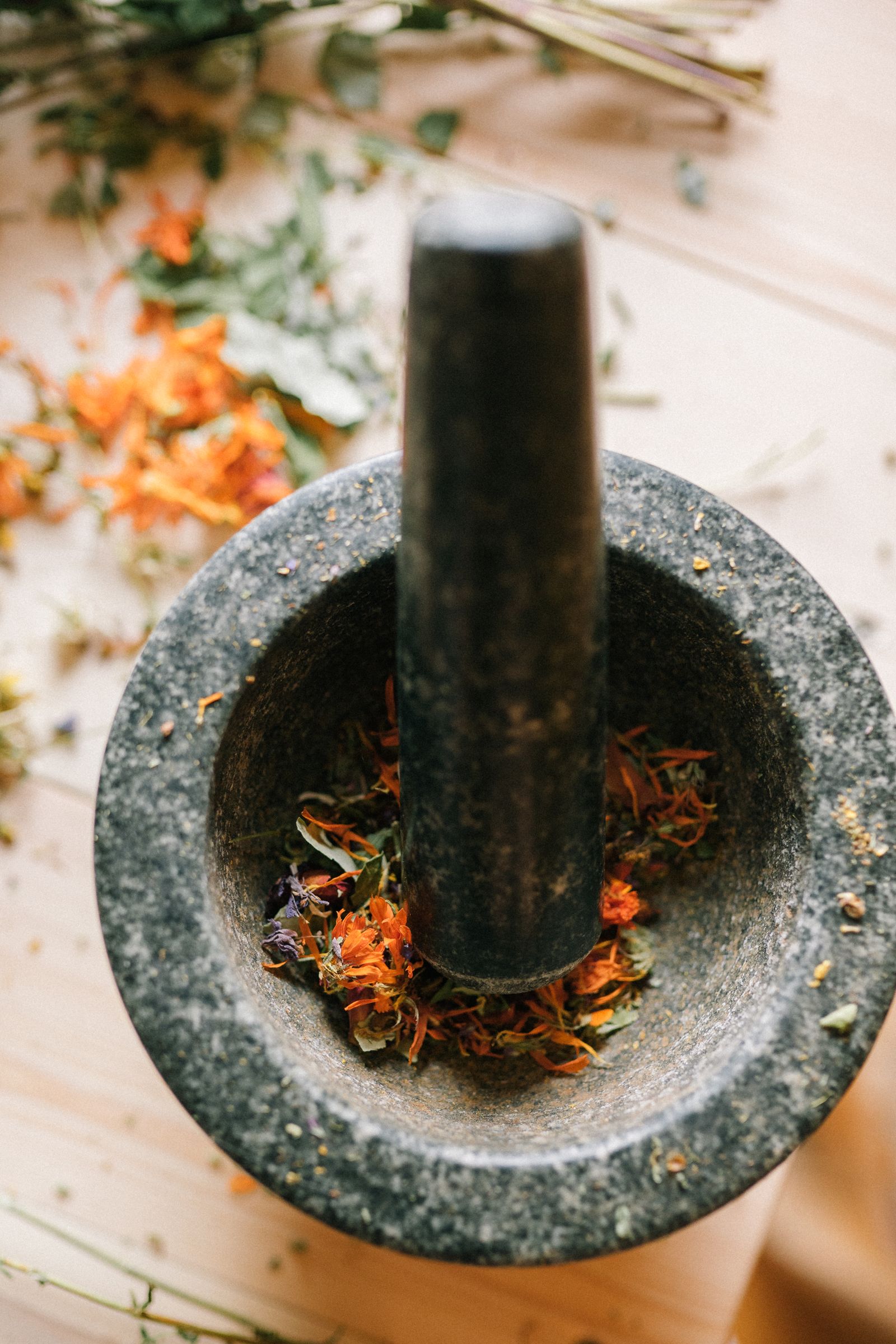
- Photo by Yan Krukau, https://www.pexels.com/photo/herbs-in-a-mortar-5480091/
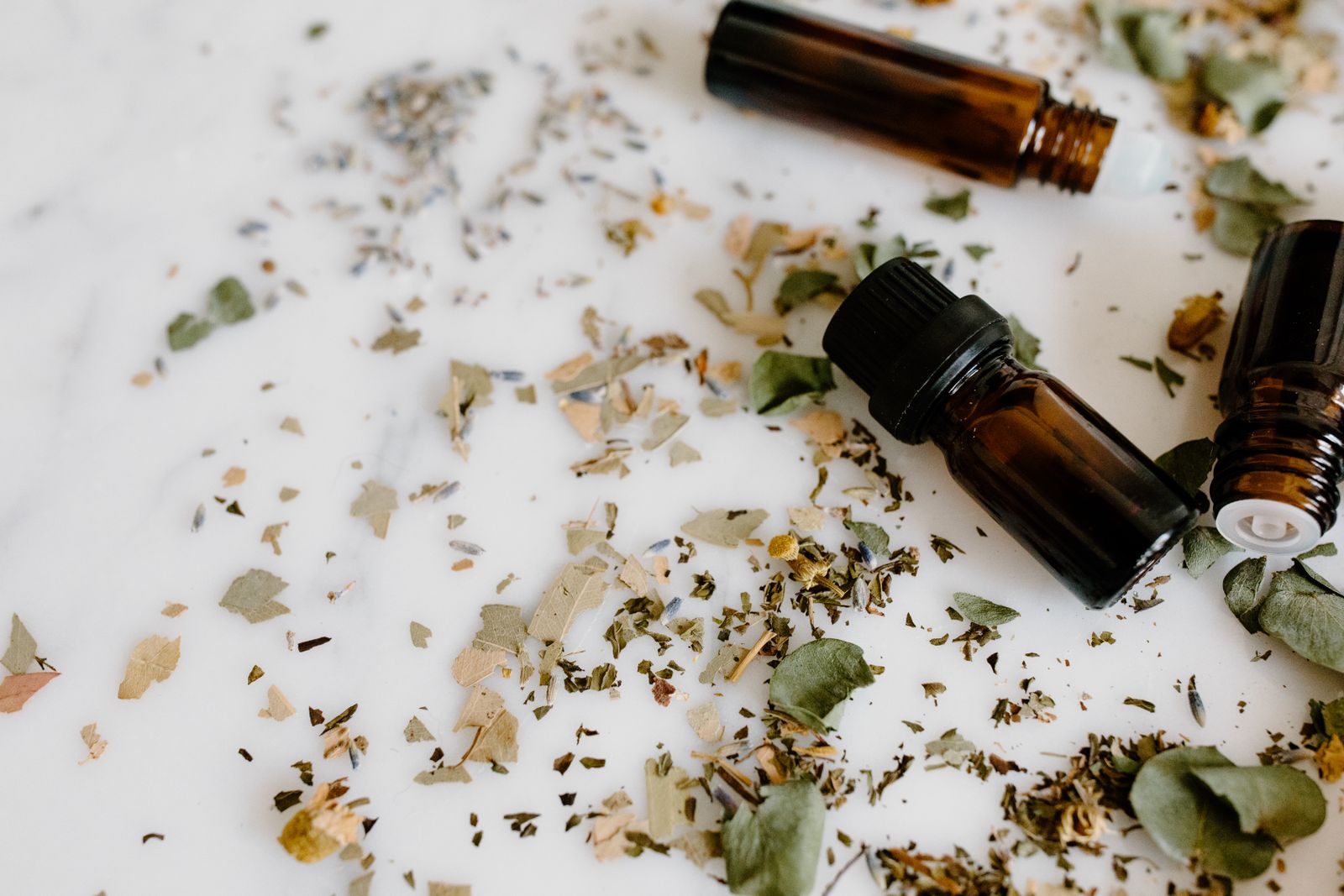
- Photo by Tara Winstead, https://www.pexels.com/photo/close-up-shot-of-essential-oil-bottles-and-herbs-on-white-surface-6694177/
More guides
- How to Choose an Alternative Medicine Practitioner You Can TrustAlternative Medicine › Alternative Medicine
- What Alternative Medicine Actually Costs: A Realistic Price GuideAlternative Medicine › Alternative Medicine
- 10 Questions to Ask Before Your First Alternative Medicine AppointmentAlternative Medicine › Alternative Medicine
- Red Flags: When an Alternative Practitioner Is Selling, Not TreatingAlternative Medicine › Alternative Medicine
- How to Buy Natural Healing Products Without Wasting MoneyAlternative Medicine › Natural Healing Products & Services
- All Guides & ArticlesBrowse the full guides library