Alternative Medicine › Acupuncture & Acupressure
What an Acupressure Session Is Like, From Intake to Aftercare
The most common thing I used to hear at checkout, from people who had just had their first acupressure session, was some version of: "That was not what I expected — in a good way, mostly." They had pictured either a massage with extra poking, or something like acupuncture performed by thumb. It is neither. Acupressure is its own appointment, with its own rhythm: you stay dressed, nobody oils anything, the pressure arrives in long, deliberate holds rather than strokes, and the quietest part of the session is often the part clients remember.
This directory lists 737 businesses under Acupuncture & Acupressure, and the service appears on spa menus, in massage studios, inside acupuncture clinics, and in dedicated shiatsu practices — which is part of the confusion, because the setting changes the wrapping. What follows is the session itself, stage by stage, as it runs in most competent practices: what the intake really involves, what the pressure feels like and how to steer it, what your body may do afterward, and the small etiquette and safety details nobody puts on the menu.
Before you arrive: booking, clothing, and the one meal rule
Book by goal, not just by duration. When you call, say the plain version of what you want — "my shoulders live up around my ears," "I get nauseous on boats and someone suggested the wrist point," "I just want to downshift" — because practitioners sequence a session around a stated aim, and the ones worth returning to will tell you on the phone if your aim is outside their scope.
Wear loose, soft, full-coverage clothing: a T-shirt or long-sleeved top, comfortable pants that are not jeans, clean socks. Acupressure is performed through clothing, usually without oil, on a massage table, a padded floor mat, or occasionally a chair. Denim blocks pressure and restricts the stretches some styles include; tight waistbands become the only thing you can think about by minute twenty. Studios keep a changing area and often a spare set of loose garments for the client who came straight from work in a suit — ask when booking if that matters to you.
Eat lightly, and not right before. A full stomach under sustained abdominal-adjacent pressure is miserable, and an empty one makes some people lightheaded during deep relaxation. The studio standard advice — a light meal about an hour or two beforehand, water available — exists because both mistakes walk in weekly. Arrive ten minutes early. Intake paperwork done in a rush produces a rushed session, and late arrivals do not get their minutes back; the clock belongs to the next client too.
The intake: ten minutes that shape the next fifty
A real intake is a conversation, not a formality. Expect questions in three layers.
First, the practical layer: injuries, surgeries, areas to avoid, pregnancy status, blood pressure, medications — especially blood thinners — and anything involving recent fractures, hernias, varicose veins, skin conditions, or implanted devices. This is not bureaucratic caution. Sustained pressure is a physical intervention, and there are places and situations where deep pressure is the wrong tool. A practitioner who asks nothing is telling you something.
Second, the goal layer: where it hurts, how it sleeps, what your digestion and stress are doing. Practitioners trained in East Asian medicine may ask questions that sound oddly wide-ranging — sleep quality, temperature preferences, energy dips at particular hours — and may look at your tongue or take your pulse at the wrist. That is their diagnostic framework doing its ordinary work; you do not have to share its theory to benefit from the thoroughness.
Third, the calibration layer: how much pressure you generally like, and an agreement on how you'll communicate during the session. Establish this before you are face-down and muffled. Studios that run well teach clients a simple scale — say, one to ten — and a house rule I still recommend: "good hurt" is welcome, sharp, breath-holding, or flinching pain is information, and you deliver it the moment it happens, not at checkout.
On the table or mat: how the session actually unfolds
Most sessions run 60 minutes; 30-minute targeted and 90-minute extended versions exist. The shape is consistent across styles:
Settling (first few minutes). You lie down — face up, face down, or on your side, depending on style and goal; shiatsu, the Japanese system within the acupressure family, traditionally works on a floor mat and moves you through several positions, while table-based acupressure usually starts face down or face up and turns you once. The practitioner may begin with broad palm pressure along the back or limbs, a kind of reconnaissance: finding where you guard, where you melt, where the day is stored.
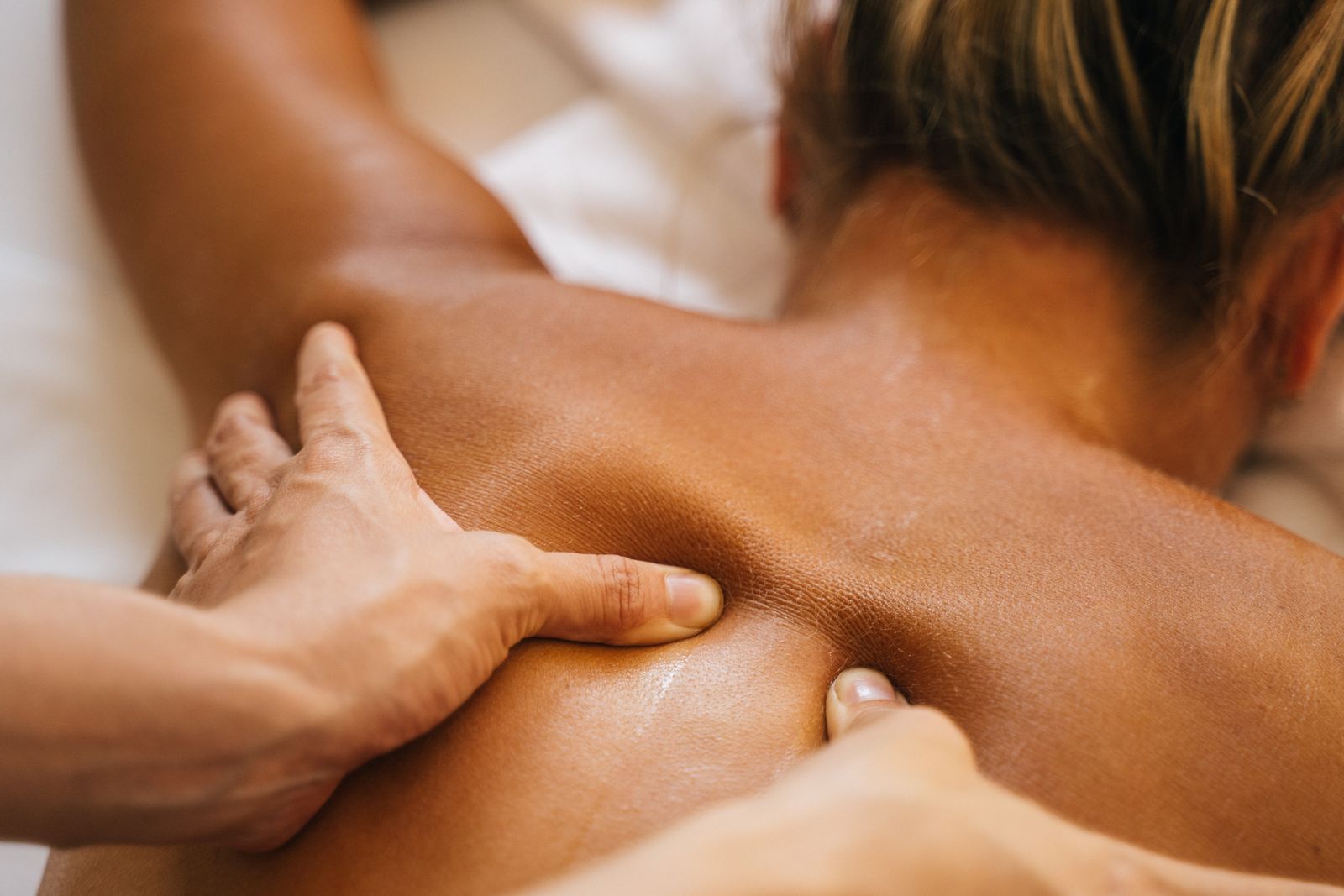
Point work (the core). This is the part that surprises massage regulars. Instead of gliding strokes, the practitioner presses specific points — with thumbs, fingertips, palms, sometimes elbows — and holds: commonly anywhere from about 30 seconds to a few minutes per point in table-based practice, leaning in with body weight rather than pushing with arm strength. Pressure often deepens on your exhale. A point may feel like almost nothing, like a dull ache that spreads, or like a tender knot being politely interrogated. Practitioners move through a sequence — along the back, legs, arms, hands, feet, neck, scalp — returning to responsive points. In shiatsu, expect rhythmic pressure across the whole body plus gentle stretches and joint rotations folded in; in point-focused acupressure, expect longer holds on fewer points, chosen for your stated goal.
The quiet finish. Good sessions end by decelerating: lighter pressure, a few minutes of stillness, sometimes a hand resting at the lower back or feet while your nervous system files the experience. You will be left alone briefly to sit up slowly. Take the slowness seriously; standing up fast from deep relaxation is how clients get dizzy in hallways.
Throughout, communication is short and practical. "Less there." "That one — stay." "My left shoulder just let go." Practitioners want this. What they cannot use is silence from a client who is enduring the session, which is why the calibration conversation happened at intake.
Acupressure, shiatsu, massage, acupuncture: the honest distinctions
| Acupressure | Shiatsu | Massage | Acupuncture | |
|---|---|---|---|---|
| Tool | Fingers, thumbs, palms, elbows | Same, plus stretches and joint rotation | Hands, with strokes and kneading | Fine needles |
| Clothing | On | On | Usually off, draped | Partial access to skin |
| Surface | Table or mat | Traditionally a floor mat | Table | Table |
| Framework | Acupoints and meridians from East Asian medicine | Japanese system built on the same framework | Muscles and soft tissue, Western anatomy | Acupoints and meridians |
| License to offer | Usually a massage/bodywork license or acupuncture license, varying by state | Same | Massage license | Acupuncture license |
One more expectation to set, because it decides whether first-timers enjoy themselves: acupressure is not a performance you watch, it is a state you sink into, and the first ten minutes often feel like nothing much is happening. The work is cumulative. Points respond over a hold, not at first touch, and many clients report that the session only "arrives" somewhere around the twenty-minute mark — which is why the 30-minute taster, though cheaper, is the version most likely to leave a newcomer underwhelmed. If you can, make your first appointment a full hour.
What it can and can't claim — and the one use with real trial data
Studios are at their worst when the menu copy promises the moon. Here is the calibrated version. The best-studied acupressure application is not relaxation; it is nausea, specifically pressure at the P6 (Neiguan) point on the inner wrist — the spot under the wristbands sold for travel sickness. A Cochrane review, updated with evidence current to June 2025, pooled 77 studies with 9,847 participants on wrist PC6 stimulation for preventing nausea and vomiting after surgery: noninvasive techniques such as acupressure bands, combined with standard anti-sickness drugs, probably reduce the need for additional drug therapy, and PC6 techniques overall may reduce postoperative nausea and vomiting compared with sham. Cochrane is equally clear about the limits: confidence in the evidence is generally low, studies varied, and reported side effects were minor and transient — skin irritation, redness, blistering, or pain at the band site. For pregnancy nausea, the older Cochrane picture is thinner and mixed: limited evidence, no firm conclusion. That is what honest evidence looks like in this field — a specific point, a specific use, a real but modest effect — and it is the standard to hold every other claim on the menu against. For pain, stress, and sleep, most people are buying a plausible, low-risk hour of skilled pressure and enforced rest, which many find genuinely valuable. Just buy it as that.
Aftercare: the normal, the notable, and the not-normal
Normal in the 24 hours after a first session: a pleasant heaviness or sleepiness; mild soreness in worked areas, like the echo of a workout; occasional light headache or emotional looseness; deeper sleep that night; sometimes feeling energized instead. Studios advise water, a light evening, and no heroic workouts the same day — not because of any toxin mythology (you will hear "drink water to flush toxins" at some front desks; it is a harmless ritual attached to a claim physiology doesn't support) but because your body just did something unfamiliar and rest consolidates it.
Notable — mention it at your next session: bruising at a point (pressure was too deep for that tissue), soreness lasting beyond two days, or a spot that stayed tender. That is calibration data, and a good practitioner adjusts.
Not normal — call the practice, and your own clinician if it persists: sharp or radiating pain, numbness, swelling, dizziness that doesn't clear, or anything that frightens you. These are rare with pressure-based work, which is one of acupressure's genuine advantages over needling — there is nothing to break, bend, or infect — but rare is not never, and reputable studios want the call.
Finally, the tipping and rebooking norms, since first-timers ask at my old front desk weekly: tip as you would for massage in a spa setting (private practitioners who set their own prices often don't expect it — when in doubt, ask the desk, not the internet). And resist the hard sell on packages at checkout. A fair practice suggests a rhythm — often a short series for a specific complaint, spaced a week or two apart, then reassessment — and is entirely comfortable with "let me see how I feel tomorrow." Book the second session because of how you feel tomorrow. That was always the right test, and the good studios know it.
Sources
- Cochrane, "What are the benefits and risks of different wrist PC6 acupoint stimulation techniques for preventing nausea and vomiting after an operation?" — network meta-analysis, 77 studies, 9,847 participants; evidence current to June 2025; noninvasive PC6 techniques with antiemetics probably reduce rescue drug use; confidence generally low; minor transient side effects. https://www.cochrane.org/evidence/CD003281_wrist-pc6-acupuncture-point-stimulation-prevent-nausea-and-vomiting-after-surgery
- Matthews, A. et al., "Interventions for nausea and vomiting in early pregnancy," Cochrane Database of Systematic Reviews — evidence for P6 acupressure in pregnancy limited; lack of high-quality evidence for firm conclusions. https://www.cochranelibrary.com/cdsr/doi/10.1002/14651858.CD007575.pub2/pdf/CDSR/CD007575/rel0002/CD007575/CD007575_abstract.pdf
- Booksy, "Acupressure Near Me" — practitioner-facing description of session structure: intake, fully clothed treatment on table or mat, point holds of 30 seconds to 3 minutes, sessions typically 60–90 minutes; acupressure vs. shiatsu distinctions. https://booksy.com/en-us/s/acupressure
- Photo by Anna Tarazevich, https://www.pexels.com/photo/6560287/
- Photo by Tima Miroshnichenko, https://www.pexels.com/photo/6187290/
More guides
- How to Choose an Alternative Medicine Practitioner You Can TrustAlternative Medicine › Alternative Medicine
- What Alternative Medicine Actually Costs: A Realistic Price GuideAlternative Medicine › Alternative Medicine
- 10 Questions to Ask Before Your First Alternative Medicine AppointmentAlternative Medicine › Alternative Medicine
- Red Flags: When an Alternative Practitioner Is Selling, Not TreatingAlternative Medicine › Alternative Medicine
- How to Buy Natural Healing Products Without Wasting MoneyAlternative Medicine › Natural Healing Products & Services
- All Guides & ArticlesBrowse the full guides library