Alternative Medicine › Massage Schools
Massage Schools for Seniors: Costs, Comfort and the Adjustments Worth Asking About
The cheapest good massage in most American towns is not at a spa, a chain or a clinic. It is at a school. Massage schools run public student clinics — real treatment rooms where advanced students, supervised by licensed instructors, complete the hands-on hours their training requires — and they price those rooms to fill them. For a senior with chronic pain, for whom massage works best as a regular, repeating expense rather than an occasional treat, that pricing changes the whole calculation.
It also changes the experience, in ways that matter more at seventy than at thirty-five. Student clinics run on school calendars, school furniture and school rules. Some of those are small prices to pay. Some, for an older body that needs help onto the table, light pressure over fragile bones, and time to dress without being hurried, need arranging in advance. This guide covers both sides honestly: what a massage school clinic costs, what comfort looks like there, and the specific adjustments worth asking about before you book — because the good schools make them readily, and the time to discover that is on the phone, not on the table.
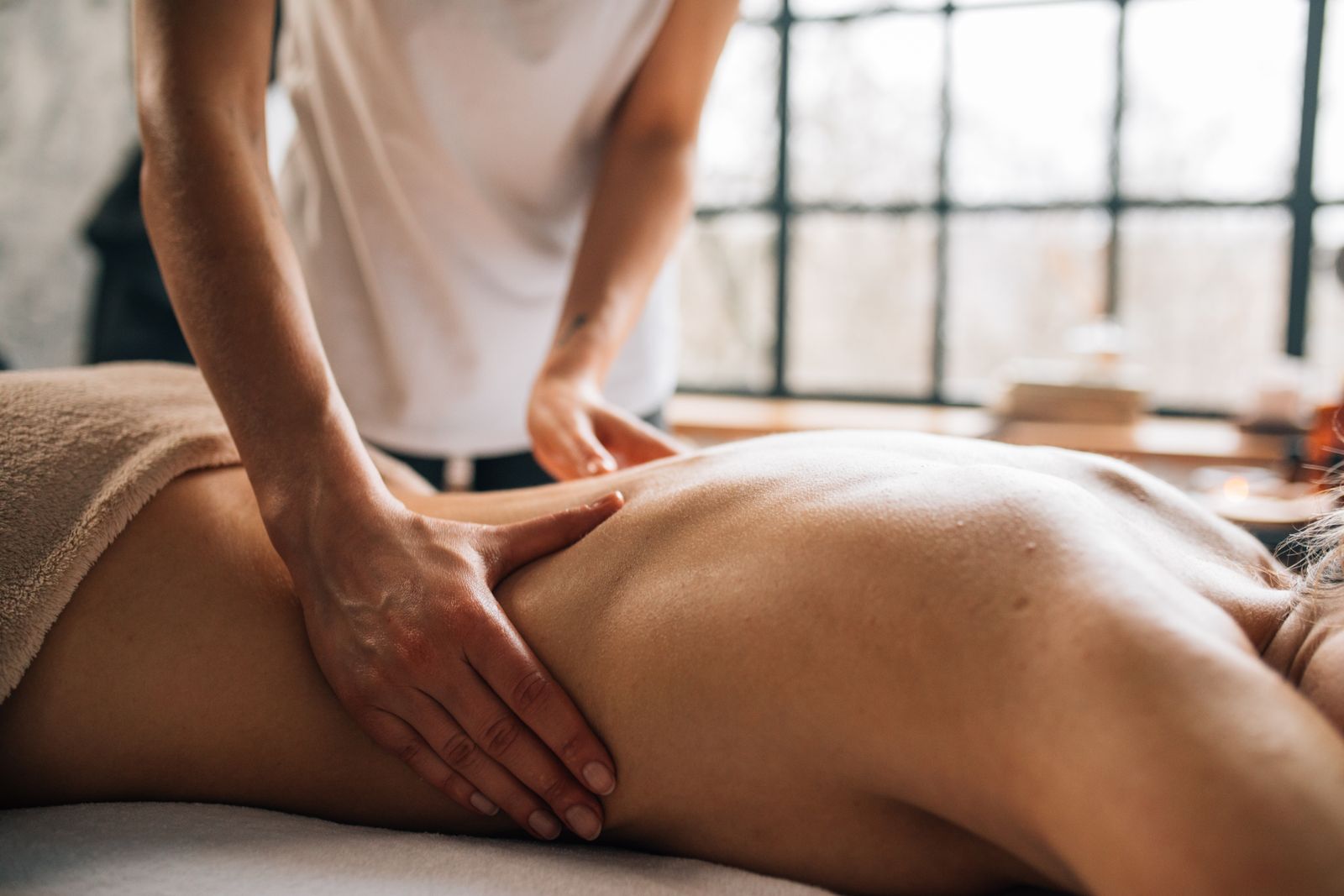
What a student clinic is — and is not
A massage school's student clinic is the practical half of a massage education. Students who have completed their classroom groundwork — anatomy, physiology, pathology, technique — treat members of the public under the supervision of licensed instructors, who set the standard, review intakes, check in during sessions and intervene when a student's hands need guidance. The schools in this guide describe the arrangement in near-identical terms: treatments performed by supervised students in advanced training, in individual treatment rooms, by appointment.
It is not a spa with trainees sprinkled in. The differences are structural. You generally cannot choose your therapist, and at some schools you cannot book by gender preference — one Denver-area school states both limits plainly, adding that its students are at various stages of the curriculum and may not be able to commit to a specific level of pressure or technique. The therapist you liked will graduate. Clinic hours follow the academic calendar — one Nebraska institute runs its student spa on two weekends a month while school is in session — and appointments are scarcer, with stricter cancellation terms: 48 hours' notice at one Texas academy, a 50 percent fee for cancelling inside 24 hours at the Denver school, prepayment at booking at several.
In exchange, you get two things a senior with chronic pain should value. The first is price, below. The second is supervision itself: an instructor reviewing your intake and circulating during your session is a second pair of trained eyes that a solo professional practice does not offer. For a client with a complicated history, that oversight is not a compromise. Used well, it is a feature.
The costs: roughly half, sometimes less
Published student-clinic prices across the country cluster tightly. A Texas massage academy's teaching spa lists a one-hour relaxation massage from $34, deep tissue at $44 and trigger point work at $49. A Lincoln, Nebraska institute charges $50 for an hour, $75 for ninety minutes and $100 for two hours, across Swedish, deep tissue and hot stone alike, with couples sessions at $100 for an hour. An Austin massage school's clinic offers one-hour therapeutic massages at $55. A Denver-area school charges $49 for a 50-minute massage and $69 for advanced treatments, with memberships at $39 a month for a monthly 50-minute session and $55 for an 80-minute one.
Set those against the professional market, where a 60-minute session typically runs $50 to $150 nationally and standard independent and spa prices cluster between $80 and $150. The student clinic is not a small discount. It is a different price category:
| Option | Typical 60-minute cost | What the saving buys and costs |
|---|---|---|
| Student clinic | $34–$55 | Supervised student; limited hours; no therapist choice; school-calendar availability |
| Student clinic membership | $39–$55 per month | A monthly session at the lowest rate, on school terms |
| Chain / membership studio | $65–$100 | A licensed therapist, standardised service, wide hours |
| Independent therapist | $80–$130 | Continuity — the same licensed hands every visit |
| Day spa | $90–$150 | Setting and amenities around the same core hour |
For chronic pain, run the annual arithmetic, because that is the comparison that matters. A fortnightly professional massage at $100 costs about $2,600 a year. The same rhythm at a $50 student clinic costs about $1,300; at $34, under $900. That difference is the difference between massage as an occasional response to a bad week and massage as a standing part of how you manage pain — which is how the evidence for it, such as it is, is usually framed: regular, modest, continuing.
Two cost cautions. Tipping customs vary at schools — one clinic notes cash tips may be gifted to students at the guest's discretion, not expected but appreciated — so ask rather than assuming either way. And prepayment plus strict cancellation terms mean a flare on the wrong morning can cost you the session fee; for clients whose pain is unpredictable, ask about the clinic's actual practice for regulars before you prepay a series.
Comfort: what changes for an older body in a school setting
The treatment itself, competently supervised, is the least of it. The comfort questions at a school clinic are logistical, and they are the questions seniors should ask first.
Getting on and off the table. School clinics use standard treatment tables in standard rooms. If you need a lower table, a step, extra time or help transferring, that must be arranged — schools are teaching environments with tight changeovers, and the unhurried ten minutes a good private practice builds in may not exist unless you request it. Ask directly: can I have the first appointment of a session block, when nobody is rushing, and can an instructor or aide be present while I get settled?
Positioning. Lying face down for an hour is not neutral for many older bodies — breathing, reflux, shoulder and neck problems, recent surgery all argue for side-lying work, a bolstered semi-reclined position, or a seated session. Students learn these modifications, and instructors expect to teach them; a school clinic can be an unusually good place to ask for positioning changes, because adapting technique is literally the curriculum. What you must do is ask in advance, on the intake and again by phone, rather than negotiating with a nervous student in the room.
Pace and pressure. Sessions at schools run to the clock, and students — eager, recently trained in deep work, anxious to be effective — can default to more pressure than an older client wants. State your pressure plainly at the start, in numbers if the clinic uses a scale, and treat the instructor's check-in as your moment to correct it. You are not grading the student by enduring.
Privacy and interruption. Instructors enter rooms during school-clinic sessions; one school warns guests that an instructor may demonstrate a stroke or two on your body if training requires it. That is reasonable, disclosed and part of the bargain — but a senior who would find it unsettling should hear it now, not mid-session, and may reasonably ask how often it happens and whether they can request minimal interruption.
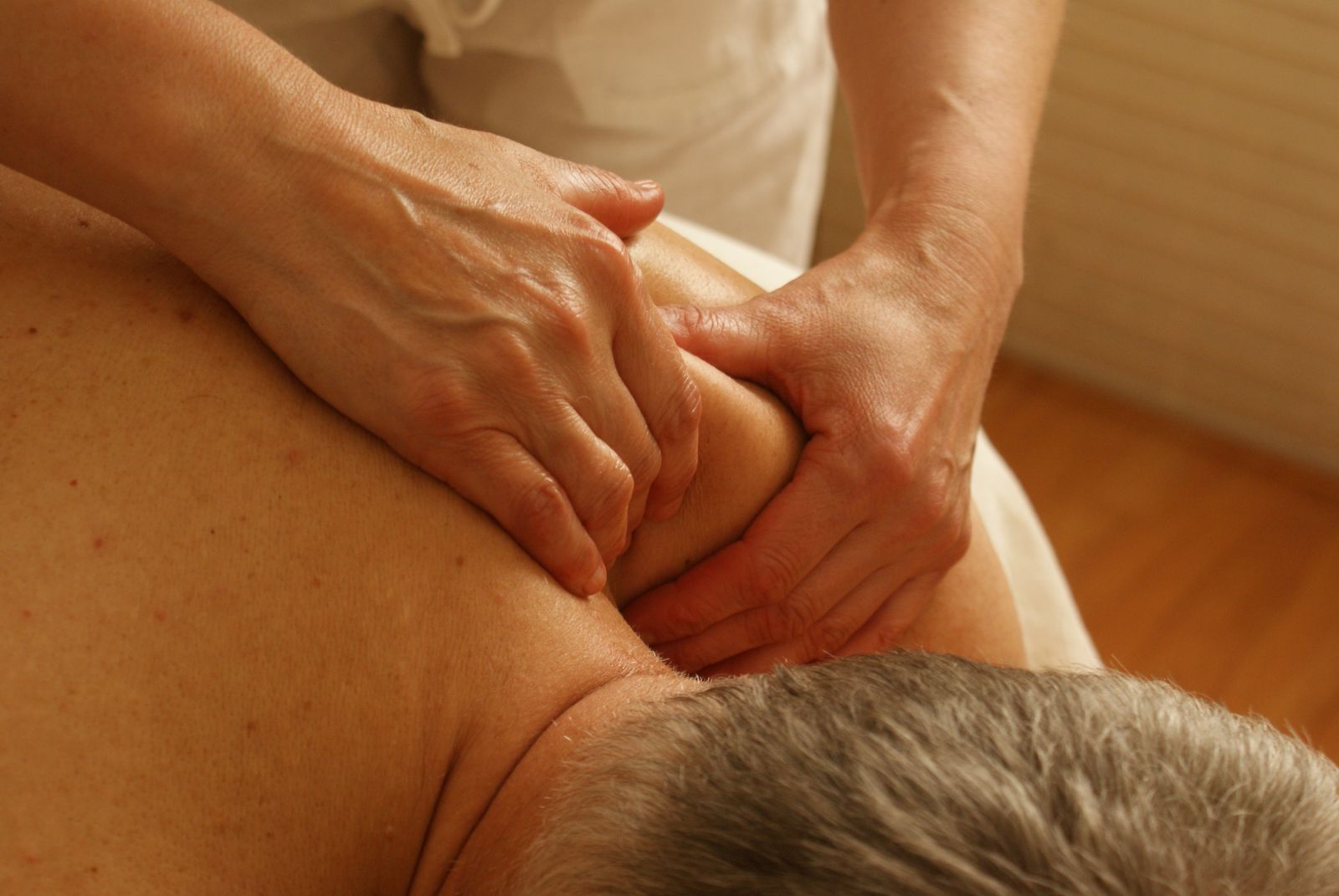
The medical adjustments: where supervision earns its keep
Chronic pain in later life rarely travels alone, and the conditions that accompany it change what massage should look like. The consistent guidance across senior-massage sources is that these are mostly pressure and planning questions, not prohibitions — but they must reach the therapist before the session, which at a school means reaching the intake and the instructor, not just the student.
- Blood thinners. Warfarin, the newer anticoagulants and antiplatelet drugs make bruising easy and bleeding slower to stop. Light-to-moderate Swedish-style work is generally the adjustment; deep tissue and vigorous technique are what to avoid, and any bruise or varicosity should be worked around. Tell the clinic the medication by name.
- Osteoporosis and fragile bones. Pressure over the spine and ribs must stay light, and deep or percussive work over the spine is out. The National Center for Complementary and Integrative Health's safety summary notes that the rare serious harms reported from massage — including fracture — have involved vigorous techniques and people at increased risk, older adults among them. Gentle work remains on the table; force does not.
- Skin and sensation. Thinner, fragile skin tears and marks under friction, so strokes should be gentler and well lubricated. Diabetes-related loss of feeling in the feet and legs means a client may not register pressure or heat that is too much — the therapist must check rather than rely on feedback, and heat should stay conservative.
- Clots, surgery and cancer. A leg with an active or suspected deep vein thrombosis is not to be massaged — that is a medical assessment, not an appointment. Recent surgery and joint replacements need healing time and clearance around the site. Massage during cancer treatment is commonly enjoyed and commonly modified, with the treating team's knowledge, and tumour and radiation areas avoided.
- Getting up afterwards. Massage can leave blood pressure lower and balance unsteady for a few minutes. In a school clinic with a schedule to keep, insist on the unglamorous adjustment that prevents the most common senior injury in any clinic: sit up slowly, sit on the table edge before standing, and do not be waved out of the room while light-headed.
Bring this list on paper. A student meeting your history for the first time, with an instructor reviewing it, is better placed to act on it than a student hearing it in the doorway — and a written list is how a caregiver's knowledge, if you have one helping you, survives the hand-off.
How to choose a school clinic, as a senior
Ask five questions when you call. Are sessions supervised by licensed instructors who review intakes — and can a client with medical conditions be flagged to the instructor in advance? What are the clinic's hours across the year, including school breaks, and how far ahead does it book? Can positioning, pressure limits and extra settling time be noted on the booking, not improvised? What are the prepayment and cancellation terms when a medical flare intervenes? And is there a route to a licensed graduate or instructor session — some schools offer advanced or instructor work at higher prices — for the visits when a student is not the right choice?
Then book once, at the quietest time they offer, and judge the clinic on the adjustments rather than the ambience. A school that handles your transfer, your pressure limit and your medication list without fuss has shown you its teaching culture, which is the product you are actually buying across a year of visits.
This site lists 109 massage schools, and the clinics inside them are the most underused bargain in American massage: supervised, structured, and priced at $34 to $55 an hour in a market that charges two to three times that. For a senior with chronic pain, the trade is real — no chosen therapist, a school calendar, a stricter cancellation clock — and so is the saving, roughly $1,300 a year on a fortnightly habit. Ask for the adjustments early, in writing, and the school's supervision stops being the catch. It becomes the reason to go.
Sources
- Texas Massage Academy teaching spa, Brownwood — establishes student-clinic prices from $34 for a one-hour relaxation massage, $44 for deep tissue and $49 for trigger point work, performed by supervised students, prepaid at booking with 48 hours' cancellation notice.
- Myotherapy Institute Student Spa, Lincoln, Nebraska — establishes prices of $50 for one hour, $75 for ninety minutes and $100 for two hours, by advanced students supervised by licensed massage therapy instructors, open two weekends a month while school is in session.
- St. Moritz Massage School student clinic, Denver area, and Lauterstein-Conway Massage School, Austin — establishes a $49 50-minute massage and $69 advanced treatments, memberships at $39 and $55 a month, a 50 percent fee for cancellation within 24 hours, no booking by gender preference, instructor entry and demonstration during sessions, and a $55 one-hour clinic massage in Austin.
- National Center for Complementary and Integrative Health, massage safety summary, via published senior-massage guidance — establishes that the risk of harm from massage appears low but that rare serious effects, including fracture, have involved vigorous techniques and people at increased risk, including older adults.
- Published senior massage safety guidance, including Eldercare Start Guide and Parlance Massage — establishes adjustments for blood thinners, osteoporosis, fragile skin, diabetes-related sensation loss, deep vein thrombosis, recent surgery and cancer care, and comfort adjustments including lighter pressure, side-lying or seated positions, shorter sessions and frequent check-ins.
Photo by KoolShooters, https://www.pexels.com/photo/6628649/ Photo by Pixabay, https://www.pexels.com/photo/adult-close-up-cure-hands-275768/ Photo by Anete Lusina, https://www.pexels.com/photo/5240643/
More guides
- How to Choose an Alternative Medicine Practitioner You Can TrustAlternative Medicine › Alternative Medicine
- What Alternative Medicine Actually Costs: A Realistic Price GuideAlternative Medicine › Alternative Medicine
- 10 Questions to Ask Before Your First Alternative Medicine AppointmentAlternative Medicine › Alternative Medicine
- Red Flags: When an Alternative Practitioner Is Selling, Not TreatingAlternative Medicine › Alternative Medicine
- How to Buy Natural Healing Products Without Wasting MoneyAlternative Medicine › Natural Healing Products & Services
- All Guides & ArticlesBrowse the full guides library