Alternative Medicine › Licensed Massage Therapists
Licensed Massage Therapy Scams and Pressure Tactics: How to Spot Them Before You Pay
Massage therapy is, in the main, an honest trade practiced by licensed professionals who went to school, passed a national exam, and renew their credentials on schedule. That is exactly why the dishonest corners of the industry work so well: they borrow the trade's legitimacy. If you are arranging massage for a parent — booking the appointments, buying the gift membership, fielding the sales call afterward — you are the person these tactics are aimed at, because caregivers pay reliably, ask politely, and are often not in the room when the pressure is applied. This guide names the recurring patterns, from the membership trap to the unlicensed storefront, and gives you the checks to run before money moves.
Tactic one: the membership that is easy to join and engineered to be hard to leave
The subscription massage model — a monthly fee that banks a session credit — is legitimate on its face and genuinely suits some regulars. The complaints that pile up at the Better Business Bureau about the largest chain in this space are not about the massages. They are about the exit. Read enough of them and the same mechanics repeat:
- Credits that evaporate at cancellation. Members report being told that accumulated, paid-for session credits must be used within a short window — one complaint describes 12 unused credits expiring 60 days after cancellation, after $954 in monthly fees at $79.50 had produced not a single delivered session, because the clinic kept cancelling appointments for staffing shortages. Another describes credits simply "taken away" when the account closed.
- Charges that outrun the service. One member reports 56 unused sessions banked while billing continued, after her home location closed and the account was transferred to another franchise without her noticing.
- Cancellation gated behind the company's own paperwork. Members describe being told an email or phone call cannot cancel or freeze an account — only the chain's proprietary form will do — while monthly charges continue in the meantime. One long-time member's BBB complaint notes, accurately, that the chain "has been sued because of cancelling and unused credits."
- Gift purchases with undisclosed strings. A reviewer who bought a $195 gift session for her husband reports that the card-on-file requirement for booking was never mentioned at purchase despite her asking directly what the recipient would need — and that the gift card was, per policy, non-refundable.
None of this is unique to one brand; it is the standard risk profile of any prepaid, auto-renewing wellness membership. The checks are correspondingly standard. Before enrolling a parent, get four answers in writing: what happens to unused credits if we cancel; how exactly is cancellation performed and when does billing stop; can credits be transferred or used at other locations; and is there a freeze option, and what triggers it. If the answers live only in a salesperson's voice, assume the contract says the worse thing. Buy gift sessions from franchises only after asking what the recipient will be required to hand over at booking — and remember that federal law gives gift cards a floor of protection (no expiry before five years, no dormancy fees in the first year) that membership credits, which are not gift cards, do not enjoy.

Tactic two: the in-room upsell, dressed as a diagnosis
The second pressure point is quieter: the table itself. A client — perhaps your parent, alone, undressed, mid-appointment — is told that the therapist has found something worrying: severe adhesions, a rotated pelvis, "toxins" that need flushing, a condition that requires three sessions a week for twelve weeks, plus a supplement, a topical product, or a device, available at the front desk. Two separate problems hide in this script. The first is scope: in every state that licenses massage therapists, diagnosis is outside that license. A massage therapist may describe what they feel in tissue and may suggest you see a physician; they may not diagnose a medical condition or prescribe a treatment plan for one. The second problem is the venue. A sales pitch delivered to a person on a table is not a fair negotiation, and reputable practices know it — their therapists recommend rebooking at the desk, in clothes, with a calendar and a wallet both in hand.
The caregiver's version of this check happens before the first appointment: ask the practice how treatment plans are proposed. If the answer involves an assessment that only the selling therapist performs, a package that must be bought today, and consequences described in medical language, you have found a sales operation with treatment rooms. Genuine clinical massage exists — in physical therapy offices, pain clinics, and hospital programs — and it characteristically comes with intake paperwork, coordination with the patient's physician, and no retail shelf.
Tactic three: prepaid packages and the disappearing business
Independent studios run the membership play in miniature: ten sessions prepaid at a discount, gift packages at holidays, "founding member" offers at openings. The discount math is usually real. The risk is structural and simple — a prepaid package is an unsecured loan to a small business. If the studio closes, relocates, or is sold, package holders stand near the back of the line with other unsecured creditors, and the BBB files include members whose home locations closed mid-membership with credits stranded. Rules of thumb that keep the exposure sane: never prepay more than you can afford to lose; prefer packages measured in weeks of use rather than months; pay by credit card, whose chargeback window is your only real insurance; and treat escalating prepay discounts — the price dropping each time you hesitate — as information about the business's cash position, not its generosity.
Tactic four: no license at all
Underneath the pressure tactics sits the outright fraud: massage offered by people with no license, in states where a license is the law. In most of the country, practicing massage for pay requires a state license earned through an approved training program, a background check, and the MBLEx, the national licensing exam run by the Federation of State Massage Therapy Boards. Four states — Kansas, Minnesota, Vermont, and Wyoming — have no statewide license, and California runs a voluntary state certification through the California Massage Therapy Council that many cities effectively require. Everywhere else, the check takes about ninety seconds: the license belongs to the individual, not the business, so get the therapist's name and license number and search it on the state board's public lookup. Confirm the status reads active, the name matches the person who will actually be in the room, and no disciplinary action is attached. A licensed premises staffed by unlicensed hands is not a technicality; for an older client with fragile skin, anticoagulant medication, or a cancer history, an untrained therapist is a safety issue, not a bargain. Board certification through the NCBTMB is a voluntary credential above licensure — a good sign, never a substitute for the license itself.
Tactic five: the storefront that is not a massage business at all
The darkest corner is the illicit massage business — a storefront advertising massage that fronts for commercial sex, frequently staffed by trafficked workers. Anti-trafficking organizations estimate 7,500 to 11,000 such businesses operate in the United States. You do not want to book one for your parent, and the tells are consistent enough to list: windows blacked out or papered over; a generic sign reading little more than "Massage" or "Spa"; cash-only payment with no receipts; no intake or health-history forms; no licenses posted and no therapist names anywhere; hours running late into the night; prices far below the local market. A legitimate practice looks almost boring by contrast — named, licensed therapists; health screening paperwork; posted prices and credentials; cards accepted; receipts given. If a place you have booked turns out to match the first list, leave, and know that suspected trafficking can be reported to the National Human Trafficking Hotline at 1-888-373-7888.
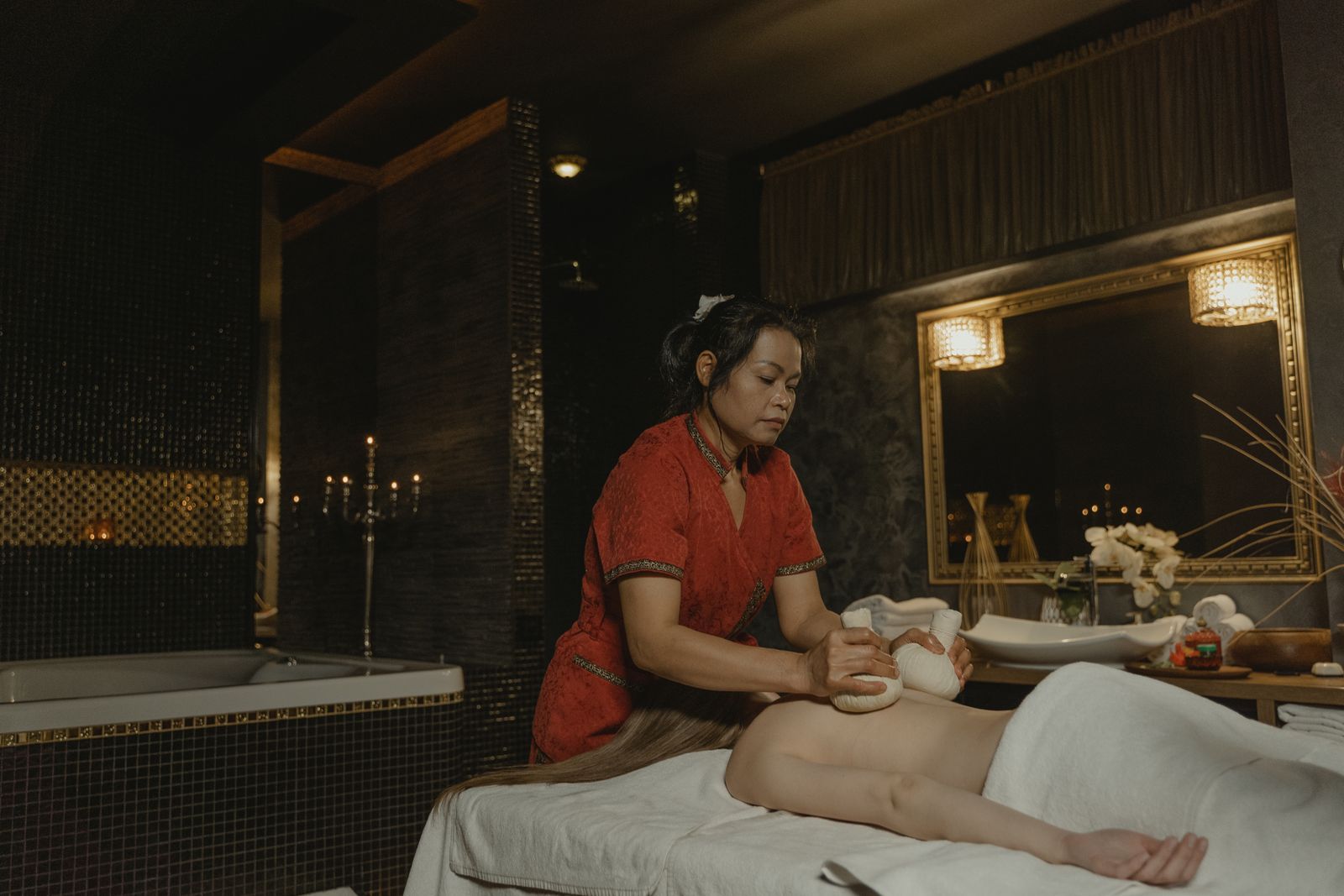
If the money has already moved
Checks fail sometimes; a parent signs something, a package gets bought as a gift, a membership runs for a year before anyone reads the terms. The recovery routes are unglamorous but real. Start with the business in writing — email, not a phone call — stating the specific term at issue: the credits that vanished, the charge after cancellation, the form nobody mentioned. Businesses resolve a surprising share of disputes at this stage, because the next stages are visible to regulators. If that fails, file where the record accumulates: a complaint with the Better Business Bureau (the complaint files quoted in this guide exist because consumers filed them, and chains answer BBB complaints through their franchise structure); a consumer-protection complaint with your state attorney general, which is the office that has historically sued over membership cancellation and unused-credit practices; and, where an individual practitioner's conduct is the problem — unlicensed practice, practicing beyond scope, misconduct in the room — a complaint to the state massage therapy board, which can act on the license itself. For prepaid packages and gift purchases, your credit card's dispute process is the fastest lever of all, which is why the earlier advice to pay by card matters: keep the contract, the receipts, and the cancellation correspondence, and file within the card network's chargeback window. None of these routes requires a lawyer, and all of them work better with the paperwork a careful caregiver already keeps.
The pre-payment checklist
For a caregiver, all of this compresses into a short routine to run before the first dollar:
- Verify the individual therapist's license on the state board lookup (or, in the no-license states, ask about training hours, MBLEx passage, and local permits).
- Get membership terms in writing — credit expiry on cancellation, the exact cancellation procedure, transferability, freeze rules — before enrolling.
- Cap prepayment at a few sessions, pay by credit card, and keep receipts.
- Ask how treatment plans and products are sold; walk away from in-room diagnoses and today-only packages.
- Read the storefront: named therapists, intake forms, posted licenses, normal hours. Absence of all four is your answer.
Find-Therapy's directory lists 177 practices under Licensed Massage Therapists specifically, within more than 5,600 massage and bodywork listings overall — a spread wide enough that no family needs to settle for the first place that answers the phone. The honest majority of this industry verifies in ninety seconds and puts its terms in writing without being asked twice. The scams and pressure tactics in this guide all depend on the same thing: money moving before those two habits get a chance to operate. Slow the payment down, and most of them stop working.
Sources
- Better Business Bureau complaint and review files for Massage Envy locations (unused-credit forfeiture, continued billing, cancellation-form requirements, gift-card and card-on-file disputes) — https://www.bbb.org/us/ky/louisville/profile/massage-therapist/massage-envy-middletown-0402-159126562/complaints and https://www.bbb.org/us/il/o-fallon/profile/massage-therapist/massage-envy-0734-310251067/customer-reviews
- Midori Spa, "How to Check Your Massage Therapist Is Licensed" (MBLEx and FSMTB; individual vs. business licensing; Kansas, Minnesota, Vermont, Wyoming without statewide licensure; California CAMTC certification) — https://midorispa.com/check-massage-therapist-license/
- Good Hands Massage Therapy, "Find Licensed Massage Therapists: Red Flags Guide" (license verification steps; NCBTMB board certification; unlicensed-operator red flags) — https://goodhandsmassagetherapy.com/how-to-find-a-licensed-massage-therapist-the-professionals-red-flag-guide-2026/
- EscortScams.org summary of Polaris Project and DOJ estimates (7,500–11,000 illicit massage businesses; front-business indicators) — https://www.escortscams.org/scams/massage-parlor-front-scam/
- Wisconsin DATCP, "Gift Cards" (federal rules under 12 CFR § 205.20: five-year minimum expiry; dormancy fees only after 12 months) — https://datcp.wi.gov/Pages/Publications/GiftCards428.aspx
- Photo by Yusuf Çelik, via Pexels — https://www.pexels.com/photo/lights-in-room-16571736/
- Photo by Tima Miroshnichenko, via Pexels — https://www.pexels.com/photo/a-masseuse-massaging-a-woman-6187418/
More guides
- How to Choose an Alternative Medicine Practitioner You Can TrustAlternative Medicine › Alternative Medicine
- What Alternative Medicine Actually Costs: A Realistic Price GuideAlternative Medicine › Alternative Medicine
- 10 Questions to Ask Before Your First Alternative Medicine AppointmentAlternative Medicine › Alternative Medicine
- Red Flags: When an Alternative Practitioner Is Selling, Not TreatingAlternative Medicine › Alternative Medicine
- How to Buy Natural Healing Products Without Wasting MoneyAlternative Medicine › Natural Healing Products & Services
- All Guides & ArticlesBrowse the full guides library