Alternative Medicine › Herbalists
Consulting an Herbalist: Contracts and Paperwork — What to Read, Question and Never Sign Blind
An herbalist's paperwork looks gentle. There is usually a long intake form — sleep, digestion, medications, the story of your health in your own words — and then, tucked behind it, a shorter document with smaller print: the consent, the disclosure, the payment agreement, sometimes a waiver. Most clients sign it the way they sign a gym waiver, without reading it, because the room is calm and the tea is already poured.
Read it anyway. Not because herbalists are unusually dangerous — most are careful, tradition-trained practitioners working hard inside a profession with no license to hide behind — but because that paperwork does unusual legal work. In licensed medicine, a regulator stands behind the practitioner. In herbalism in the United States, there is no such regulator, so the contract is the structure. What it says about who the practitioner is, what they may and may not do, what you will pay, and what happens when something goes wrong is not boilerplate. It is the whole framework. This guide walks through each document, clause by clause, and flags the sentences that decide disputes.
First, the legal fact that shapes every page
No U.S. state licenses herbalists. The American Herbalists Guild states it plainly: there is currently no licensing or certification for herbalists in any state. There is no board exam, no state registry, and no government protection around the title — anyone may call themselves an herbalist, which is why the paperwork matters more here than in a doctor's office.
The closest thing to a credential is the Guild's Registered Herbalist designation, RH (AHG). It is voluntary and peer-reviewed, not a license. Applicants document roughly 800 hours of botanical medicine education and about 400 hours of clinical practice, including work with around 80 individual clients, submit case histories and letters of recommendation, and agree to the Guild's code of ethics. The Guild paused new applications in 2026 while it updates the process, so a practitioner who says they are "applying soon" may be telling the truth — and a practitioner who claims to be "state licensed" or "board certified" as an herbalist is not, because neither exists. That single false claim, if it appears in writing, is the most useful red flag in this entire guide.
The exceptions are practitioners who hold a different license that includes herbs: a licensed acupuncturist whose state scope covers Chinese herbal medicine, or a naturopathic doctor in a state that licenses NDs. If your herbalist holds one of those, the paperwork should name the license, the state, and the number — and you can verify it with that board. If they hold none, the paperwork should say so, clearly. Which brings us to the first document.
Document 1: The disclosure — the page the law actually cares about
In several states, unlicensed complementary practitioners are legally required to hand you a written disclosure before they treat you, and the best herbalists do it everywhere, law or no law. California's version, Business and Professions Code section 2053.6, is a useful template for what a proper disclosure contains, because it lists the items in plain language:
- That the practitioner is not a licensed physician.
- That the treatment is alternative or complementary to healing arts services licensed by the state.
- That the services are not licensed by the state.
- The nature of the services to be provided.
- The theory of treatment the services are based on.
- The practitioner's education, training, experience, and other qualifications.
California also requires your written acknowledgment that you received this information, a copy for you, and the practitioner keeping theirs for three years.
Use that list as your reader's checklist in any state. A disclosure that covers all six points is a sign of a practitioner who understands their legal position and respects yours. A disclosure that is missing the qualifications section — or replaces it with adjectives ("world-renowned," "master herbalist," a title no body awards) — tells you the document was written to reassure, not to inform. Ask for the training in hours, schools, and years, in writing. A Registered Herbalist will have those numbers ready. A weekend-course graduate will too, if they are honest. Either answer is usable information; a blank is not.
Never sign blind: any disclosure that describes the herbalist as a doctor, or the service as diagnosis or treatment of a named disease, while another clause says they are not a physician. Both cannot be true, and in a dispute the contradiction will be resolved by whoever wrote it — not in your favor.
Document 2: The intake form — where your data goes
The intake is the longest document and the least examined. You will write down medications, diagnoses, allergies, pregnancies, surgeries — a real medical history, handed to an unlicensed practitioner who is generally not covered by the health-privacy rules that bind licensed providers. That does not make the intake improper; a competent herbalist needs your medication list, because herbs interact with drugs, and an intake that does not ask about prescriptions, blood thinners, and pregnancy is a safety failure, not a privacy virtue.
What to check before you complete it:
- Why is each sensitive item there? Medications, conditions, and allergies are clinically relevant. Your full date of birth, Social Security number, and employer's details are not needed for a consultation, and identity-theft hygiene applies in calm rooms too.
- How are records kept, and who sees them? Ask whether notes are paper or electronic, whether they are shared with anyone — a supervising practitioner, a student clinic, a dispensary — and how long they are kept.
- Can you get a copy? You should be able to obtain your own intake and consultation notes. If the agreement says records are the practice's property and will not be released, question it before you write anything personal.
And answer it honestly, especially the medication section. The paperwork risk most clients create for themselves is not a clause — it is an omission, a drug left off the list that interacts with the formula they are handed an hour later.
Document 3: Informed consent — risks, benefits, and the exit door
Informed consent, properly done, is a process, not a signature: the practitioner explains the risks, benefits, and alternatives of what they propose, and you decide with that information. In herbal practice a good consent form does four specific things:
- It names the limits of the evidence. It should say that outcomes cannot be guaranteed and that scientific support varies by herb and condition. Any consent form that doubles as a promise — guaranteed results, a cure timeline — is a marketing document, and guarantees in health care are a warning, not a comfort.
- It names the real risks. Allergic reaction, interactions with prescription drugs, and the particular cautions for pregnancy, breastfeeding, children, and upcoming surgery. If the form you are signing lists no risks at all, it was not written by someone thinking about your safety.
- It tells you to keep your medical care. A responsible form states that herbal services are complementary, are not a substitute for medical diagnosis or treatment, and encourages you to maintain a relationship with a licensed clinician — and to tell that clinician what you are taking.
- It preserves your right to stop. Consent you cannot withdraw is not consent. The form should make clear you may discontinue at any time — and the payment agreement, below, should not punish you for doing so.

Document 4: The fee agreement — where disputes are actually born
Most herbalist disputes are not about herbs. They are about money, and specifically about money that was prepaid. Read the fee agreement for these clauses, in this order:
| Clause | What good looks like | What to question |
|---|---|---|
| Consultation fee and length | A stated price for a stated length of visit, and a follow-up price | "Programs" with no per-visit breakdown |
| Product charges | Formulas and supplements priced separately, itemized | A single bundled total you cannot unpick |
| Cancellation policy | A clear window — commonly 24–48 hours — and a stated fee | Full-fee charges for any change, at any time, forever |
| Package and prepayment terms | What is refundable, for unused sessions, and how fast | "All sales final" on services not yet delivered |
| Retesting and review visits | When you will be seen again, and what it costs | Open-ended plans with no reassessment date |
Two clauses deserve special attention. The first is auto-renewal and subscription products: a monthly supplement subscription authorized on a card, buried in intake paperwork, will outlive your treatment unless you cancel it in the manner the clause specifies. Note the method and the notice period before you sign, not after the third shipment.
The second is the dispensary question. Many herbalists compound or sell the formulas they recommend. That is traditional and often convenient, but the agreement should let you see the formula — the herbs, in Latin or common names, and the doses — and should not forbid you from having it filled elsewhere. A practitioner who will not write down what is in a tincture you are swallowing has a paperwork problem that is also a safety problem. Under federal supplement law, products sold as dietary supplements may make structure-and-function claims but may not claim to diagnose, treat, cure, or prevent disease, and labels carrying such claims must state that the statement has not been evaluated by the Food and Drug Administration and the product is not intended to diagnose, treat, cure, or prevent any disease. If the paperwork or labels in front of you promise a cure for a named condition, the practice is operating outside that line — walk away, and keep the leaflet.
Document 5: The waiver — read the sentence about negligence
Many practices include a release or assumption-of-risk clause. Some of this is ordinary: you acknowledge that herbs are natural products with variable potency, that you were told to report reactions, that you will not stop a prescription on an herbalist's say-so. Sign that with a clear conscience.
Then look for the broad sentence: the one in which you release the practice from all liability, including for its own negligence, forever, for anything that happens. Broad waivers are treated very differently from state to state, and a clause that tries to waive everything often protects less than it claims — but you should never rely on a court later trimming a sentence you could have questioned in the room. Ask what the practice's insurance position is. A practitioner carrying professional liability insurance, and willing to say so, is a meaningful signal in an unlicensed field. A waiver instead of insurance, presented as non-negotiable, is a different signal.
Also flag any arbitration or photo/testimonial clause riding along in the same document. Consent to be photographed, quoted, or featured in marketing should be a separate, optional signature — never a condition of care buried in paragraph nine of the consent you must sign to be seen.
Your pre-signature checklist
Before you sign anything at a first herbal consultation, you should be able to answer yes to all of these:
- The disclosure states plainly that the practitioner is not a licensed physician, and names their actual training in hours and years.
- Any license claimed belongs to a real, verifiable board — and any herbal credential claimed is the Guild's RH or a school certificate, described as what it is.
- The consent names risks and interactions, guarantees nothing, and tells you to keep your medical care.
- Fees, follow-ups, cancellation terms, and product prices are itemized, and unused prepaid services have a stated refund route.
- You know what is in any formula you will take, and you may have it filled elsewhere.
- You are keeping a signed copy of everything, photographs of the pages at minimum.
This site lists 58 herbalists, alongside 291 herb retailers and 969 wholesale herb listings — a small, specialist corner of a large field, which is exactly why each practitioner's own paperwork carries so much weight. There is no board to call. There is only the document in front of you, the questions you ask before you sign it, and the copy you take home. A good herbalist will welcome all three. The signature they want is an informed one — and now yours can be.
Sources
- American Herbalists Guild — there is no licensing or certification for herbalists in any U.S. state; the Registered Herbalist designation is a voluntary, peer-reviewed credential requiring roughly 800 hours of education, about 400 hours of clinical practice, case histories, and adherence to the Guild's code of ethics, with new applications paused during a 2026 criteria update.
- California Business and Professions Code, section 2053.6 — unlicensed complementary practitioners must disclose in writing that they are not a licensed physician, that services are alternative or complementary and not state-licensed, the nature and theory of the services, and their education, training, and experience, and must obtain the client's written acknowledgment.
- Dietary Supplement Health and Education Act of 1994 — dietary supplements may not claim to diagnose, treat, cure, or prevent disease, and structure-and-function claims must carry the disclaimer that the statement has not been evaluated by the Food and Drug Administration.
- Energy Medicine Professional Association, informed consent guide — informed consent means the client is given the risks, benefits, and alternatives of a proposed intervention and decides on that basis, with state requirements varying.
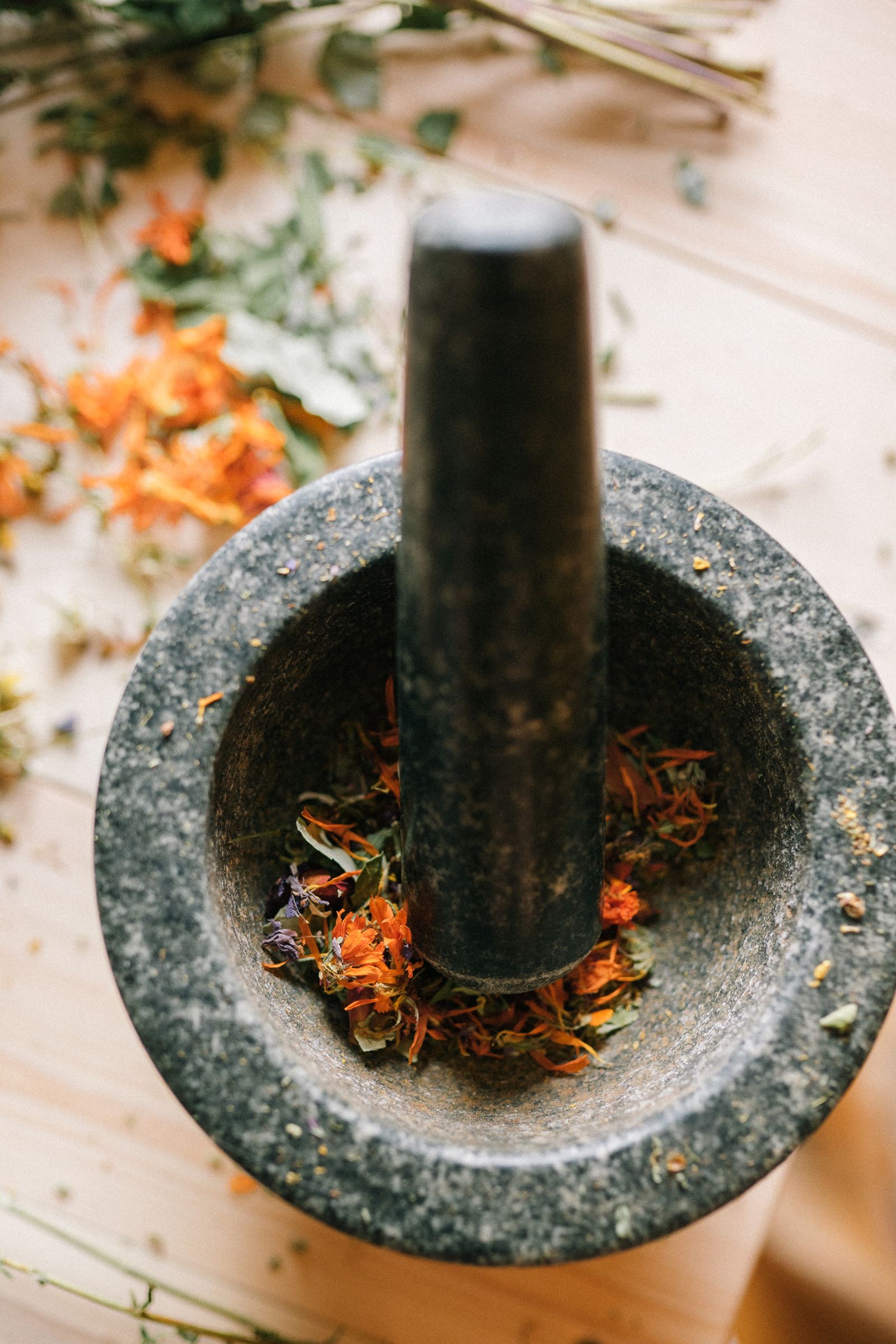
- Herbs in a mortar — photo by Yan Krukau, https://www.pexels.com/photo/herbs-in-a-mortar-5480091/
- Signing a contract — photo by Alena Darmel, https://www.pexels.com/photo/a-person-signing-a-contract-7641842/
More guides
- How to Choose an Alternative Medicine Practitioner You Can TrustAlternative Medicine › Alternative Medicine
- What Alternative Medicine Actually Costs: A Realistic Price GuideAlternative Medicine › Alternative Medicine
- 10 Questions to Ask Before Your First Alternative Medicine AppointmentAlternative Medicine › Alternative Medicine
- Red Flags: When an Alternative Practitioner Is Selling, Not TreatingAlternative Medicine › Alternative Medicine
- How to Buy Natural Healing Products Without Wasting MoneyAlternative Medicine › Natural Healing Products & Services
- All Guides & ArticlesBrowse the full guides library