Alternative Medicine › Certified & Registered Massage Therapists
Certified Massage Therapy Scams and Pressure Tactics: How to Spot Them Before You Pay
The word "certified" does a great deal of unpaid work in massage marketing. It sounds like a government stamp. Sometimes it is one — sometimes it is a weekend course, a certificate a business printed itself, or, in the cases federal prosecutors have actually taken to sentencing, a document bought for cash from a diploma mill. If you are choosing a massage therapist for a parent, the credential question comes before every other question, because it decides whose hands, training, and accountability are in the room. This guide separates the credentials that mean something from the ones that merely sound like they do, names the fraud patterns regulators have documented, and shows how the pressure tactics begin only after the paper has done its job.
First, untangle the three kinds of "certified"
American massage regulation uses similar words for very different things, and the confusion is the scam's raw material.
- A state license is the legal permission to practice, issued by a government board after approved schooling, a background check, and the MBLEx licensing exam. In most states, nobody may charge for massage without one. The license belongs to the individual, carries a number, and can be looked up — and disciplined — on the board's public register.
- A state certification is, in the places that use the term, a government credential of a different shape. California is the big example: it has no state massage license at all. Instead, the California Massage Therapy Council (CAMTC) issues a voluntary certification that lets a therapist practice statewide; certificate holders must display the original certificate — by law, not a photocopy — at each workplace and include their certification number in advertising, and anyone can verify the number on CAMTC's website.
- A private certificate is anything else: a school diploma, a course completion certificate, a specialty certificate in prenatal or lymphatic or oncology massage, membership credentials from professional associations. Some represent serious training. The voluntary Board Certification from the NCBTMB sits well above entry level and is a genuinely strong signal. Others represent a Saturday. None of them, on its own, is a legal permission to practice — and a framed private certificate on the wall tells you nothing until you know who issued it.
The pressure tactics in this field almost always exploit a substitution among these three: a private certificate presented as if it were a license, a license from somewhere else presented as if it were local, or a real credential belonging to a person who is not the person in the room.
The fraud is documented, and it is not small
It is tempting to treat fake credentials as a theoretical risk. The court record says otherwise. In 2020, a federal court in Colorado sentenced the leader of a scheme that stole the questions and answers to the state's massage licensing exam, translated them into a cheat sheet sold to applicants, and issued bogus diplomas from a school called Majestic Massage Therapy falsely certifying that buyers had completed the required 500 hours of training; he received fifteen months in prison. In New Jersey, the operator of Axiom Healthcare Academy was sentenced to thirty-three months for selling fraudulent training certificates and phony transcripts — priced between $1,000 and $2,600 — that he knew were being used to disguise prostitution businesses as legitimate massage. California made providing a counterfeit massage diploma a misdemeanor under Senate Bill 285, punishable by fines and jail, precisely because the documents were circulating. And the pattern is current: between October 2025 and May 2026, the Texas Department of Licensing and Regulation shut six massage schools by emergency order, describing two Plano schools as operating "in a manner consistent with diploma mills" — falsified attendance and internship records, instruction by unlicensed individuals, and student bodies drawn largely from out of state, whose members could not plausibly have completed the in-person hours their transcripts claimed. Texas then told every graduate of those schools, honest ones included, that their education hours would not be accepted without independent proof.
Notice who the customer for a fake credential usually is: not a lone rogue therapist but a business that needs licensed-looking paper on the wall — frequently, per both the New Jersey case and the Texas orders, an illicit establishment buying legitimacy. That is why the caregiver's check matters beyond one family's safety, and why it has to be a records check rather than a vibe check. Paper on a wall can be bought. A matching entry in a government register cannot.
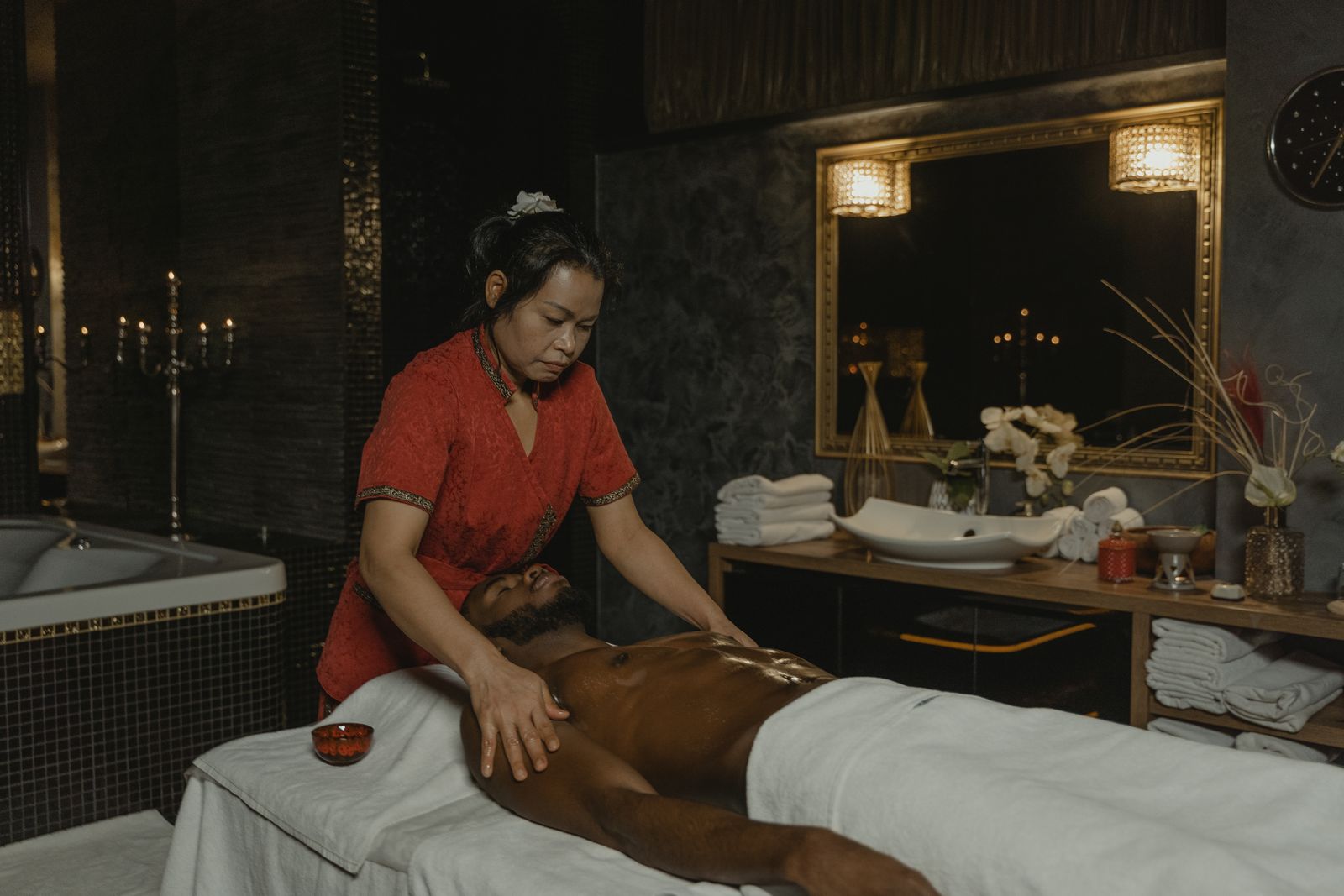
What fake, lapsed, and borrowed credentials look like in the wild
Verification guides compiled from board practice describe a recognizable set of tells:
- A photocopy or a photo on a phone instead of the original certificate or a register entry you pulled up yourself. California's insistence on originals exists because copies are the fraud's natural form.
- An exam pass letter offered as a license. Passing the MBLEx is a step toward licensure, not licensure; a school transcript or a course completion certificate is likewise a step, not the destination.
- A credential from the wrong jurisdiction — a license from another state, or a city permit from another city — presented as covering the room you are standing in.
- A number that resolves to a different person, or a name on the wall that never appears on the register at all. Borrowed credentials — the license of an owner, a former employee, a relative — are the storefront version of this.
- An expired credential with a story. Licenses lapse; honest therapists renew them and can show the current record in seconds. Reluctance, vagueness, or irritation at being asked is itself the finding.
- Specialty certificates doing heavy lifting. "Certified" in a niche technique after a short course is then used to justify premium pricing and medical-sounding claims — post-surgical lymphatic work, oncology massage — aimed squarely at families managing a parent's illness. The more medical the claim, the more the base license matters, because the specialty certificate has no regulator behind it at all.
How the pressure starts once the paper is accepted
Credential fog is rarely the whole business model; it is the door-opener. Once a client has accepted the framing of expertise, the familiar tactics follow with extra force: the assessment that discovers urgent problems only this practice's package can treat; the course of sessions that must be prepaid today at the "certified specialist" rate; the add-on modalities, each with its own certificate and its own surcharge, recommended mid-treatment to a client on the table. A parent recovering from surgery or managing lymphedema is the ideal audience for this sequence — worried, motivated, and unlikely to interrogate a framed certificate. The defense is to move every decision off the table and into the paperwork: treatment plans proposed in writing, prices quoted at the desk, and a standing family rule that nothing is prepaid on the day it is first proposed.
The in-home variant: when there is no wall to check
Everything above assumes a storefront, where certificates hang in public and a register check happens at a desk. Mobile and in-home massage — often the most practical option for a parent with limited mobility — removes the storefront entirely. The therapist arrives at the door with a table, a bag, and whatever credentials exist only as claims in an app profile or a text message. Trade coverage of the Texas crackdown makes the point directly: for a mobile therapist, the license is the only storefront a client ever sees. That raises the stakes on the register check rather than lowering them, and it adds two household rules. First, verify before the first visit, not at the door — a parent should never be the person deciding whether to admit a stranger whose number was never run. Second, treat platform badges as advertising, not verification: booking apps and directories display "certified," "background-checked," and "top rated" labels under their own definitions, which may mean anything from a government register match to a self-declared checkbox. The label is a reason to look the therapist up. It is never the lookup itself. A legitimate mobile practitioner expects the question, carries the credential, and will text you the license number in advance — because their honest competitors all do.
The five-minute verification, before any money moves
- Ask for the credential by its exact name and number. "Licensed, certified, or registered — by whom, and what's the number?" A legitimate practitioner answers without hesitation; in California, the number is required in their advertising anyway.
- Look it up yourself. State board register in licensing states; CAMTC's verify-certification search in California; the FSMTB's lookup map will route you to the right state's board. Match the name to the person you are booking, confirm the status is active, and read any disciplinary history.
- Separate the specialty certificates from the license. Ask what training stands behind a specialty claim and who issued it — then judge the premium being charged for it. NCBTMB Board Certification is verifiable on the NCBTMB's own site and means something; an unnamed "certification" from the business itself means nothing.
- Check the business layer too: a real establishment license or local permit where your city requires one, named therapists on the website, intake forms before treatment.
- Report what fails. Suspected unlicensed practice goes to the state board or CAMTC; suspected trafficking goes to the National Human Trafficking Hotline, 1-888-373-7888. Texas's school closures began with exactly such reports.

Find-Therapy's directory lists 155 practices under Certified & Registered Massage Therapists nationally — and the honest majority of them will pass the register check before you finish your coffee, most in considerably less time than that. That is the point of running it. The scams in this guide do not survive contact with a government database; they survive on the politeness of people who feel that asking for a license number implies distrust. It implies nothing of the kind. It is the same check the regulators themselves now run — and for a caregiver spending a parent's money on a stranger's hands, it is the cheapest five minutes in the whole arrangement.
Sources
- U.S. Department of Justice, U.S. Attorney's Office for the District of Colorado, "Two Sentenced In Scheme To Fraudulently Obtain Licenses For Massage Therapy" (stolen exam answers; bogus 500-hour diplomas from Majestic Massage Therapy school; 15-month sentence), September 25, 2020 — https://www.justice.gov/usao-co/pr/two-sentenced-scheme-fraudulently-obtain-licenses-massage-therapy
- U.S. Department of Justice, U.S. Attorney's Office for the District of New Jersey, "Hunterdon County Man Sentenced to 33 Months in Prison for Producing Phony Massage Therapy Training Certificates for Prostitution Businesses" (Axiom Healthcare Academy; certificates sold for $1,000–$2,600) — https://www.justice.gov/usao-nj/pr/hunterdon-county-man-sentenced-33-months-prison-producing-phony-massage-therapy-training
- Texas Department of Licensing and Regulation, emergency order against Harvard Massage Institute Inc. and American Massage Academy Inc., Plano (diploma-mill findings; falsified attendance and internship records), May 22, 2026 — https://www.tdlr.texas.gov/media/pressrelease/2026-05-22-order-against-harvard-massage-institute-and-american-massage-academy.pdf
- Mobile Massage Listings, "The Fake-Credential Crackdown" (six Texas schools closed October 2025–May 2026; graduates required to prove education hours; Massachusetts fake-transcript case) — https://www.mobilemassagelistings.com/posts/massage-license-fraud-crackdown-honest-mobile-therapists/
- Associated Bodywork & Massage Professionals, summary of California law (CAMTC voluntary certification; certificate number required in advertising; Senate Bill 285 making counterfeit diplomas a misdemeanor) — https://www.abmp.com/node/220
- InterviewerSignal, "How to Verify a Massage Therapist License" (board lookups by state; CAMTC verification; MBLEx pass letter is not a license; what fake, lapsed, or borrowed credentials look like) — https://interviewersignal.com/blog/how-to-verify-a-massage-therapist-license
- Photo by Tima Miroshnichenko, via Pexels — https://www.pexels.com/photo/woman-massaging-a-man-6186738/
- Photo by Jonathan Borba, via Pexels — https://www.pexels.com/photo/man-and-woman-soaking-feet-during-massage-19695981/
More guides
- How to Choose an Alternative Medicine Practitioner You Can TrustAlternative Medicine › Alternative Medicine
- What Alternative Medicine Actually Costs: A Realistic Price GuideAlternative Medicine › Alternative Medicine
- 10 Questions to Ask Before Your First Alternative Medicine AppointmentAlternative Medicine › Alternative Medicine
- Red Flags: When an Alternative Practitioner Is Selling, Not TreatingAlternative Medicine › Alternative Medicine
- How to Buy Natural Healing Products Without Wasting MoneyAlternative Medicine › Natural Healing Products & Services
- All Guides & ArticlesBrowse the full guides library