Alternative Medicine › Aromatherapy Skin Care
Aromatherapy Skin Care at Three Budgets: What Budget, Mid-Range and Premium Really Buy
Aromatherapy skin care is sold across a wider price spread than almost anything else in the wellness aisle. The same shelf can hold a $9 bottle of "rose oil," a $30 facial serum, and a $120 vial of true rose otto — and the honest differences between them are real, specific, and almost never the ones printed largest on the box. Meanwhile the category runs on two entirely different purchases that shoppers constantly blur: products you apply yourself at home, and treatments — aromatherapy facials — that you buy by the hour.
This guide separates the two, then walks the three budgets in each: what the money genuinely buys at budget level, what the step up to mid-range adds (this is where most of the real value lives), and what premium pricing purchases beyond that — some of it substance, some of it theatre. This site lists 70 aromatherapy skin care providers and shops, so the choice is not hypothetical.
First, the safety floor that every budget shares
Essential oils are concentrated plant extracts — 50 to 100 times more concentrated than the plant material they come from, in the Tisserand Institute's framing — and skin is where their risks live. Three rules apply identically to a $9 bottle and a $90 one:
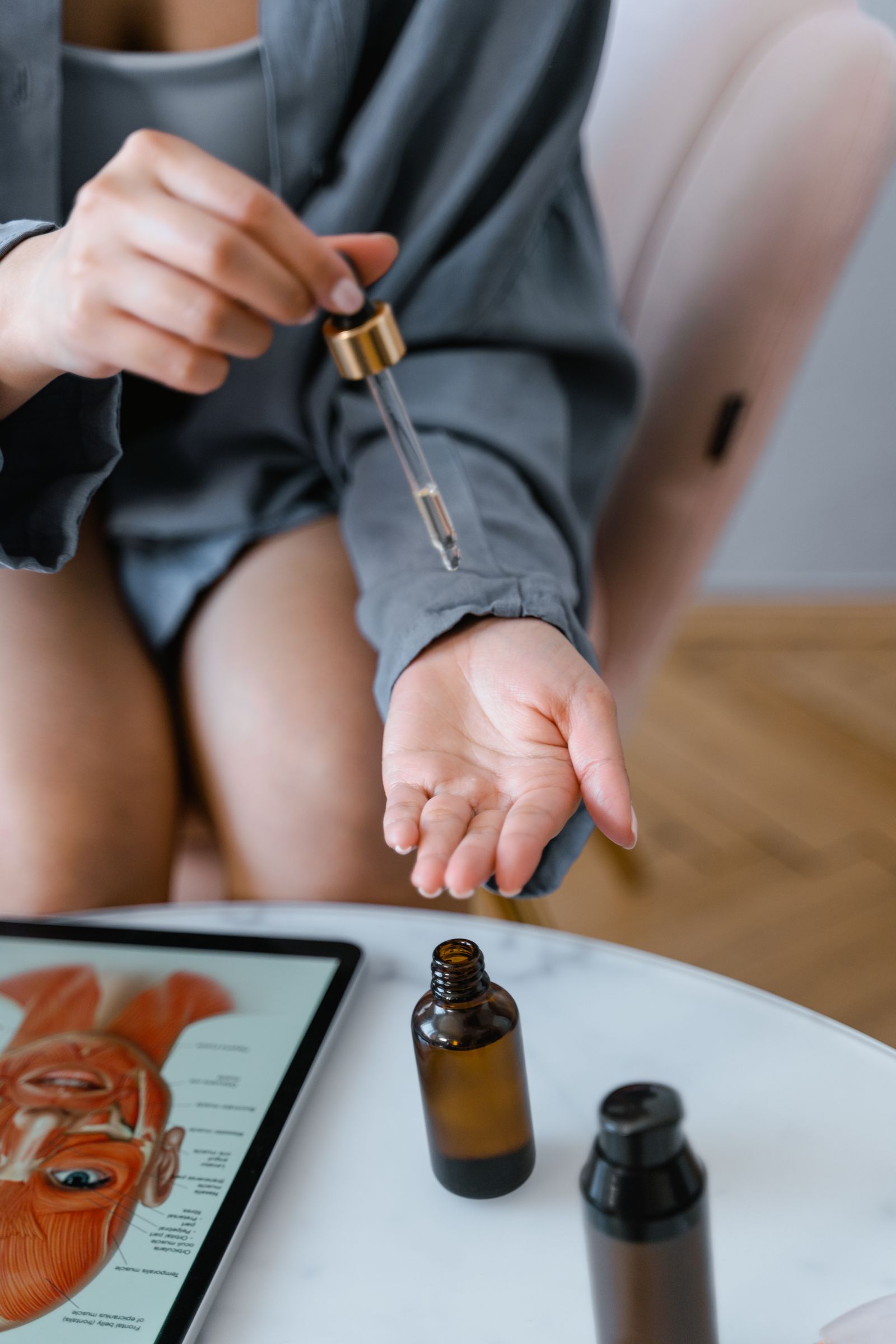
- Dilute. For leave-on facial products, the standard guidance from aromatherapy educators is 0.5–1% essential oil in a carrier — about 3 to 6 drops per ounce (30 ml) of carrier oil. Everyday body products run at 2% (10–12 drops per ounce). Undiluted application is how people acquire rashes and, with repeated use, permanent sensitization to an oil they previously tolerated.
- Respect the oil-specific ceilings. Some oils cap lower than any general chart: ylang ylang at 0.8%, jasmine absolute at 0.7%, in the limits drawn from Tisserand and Young's Essential Oil Safety. Hot oils such as cinnamon bark, clove, and oregano irritate or burn even at low dilutions.
- Keep phototoxic citrus off sun-exposed skin. Cold-pressed bergamot, lemon, and lime can cause real burns and pigmentation changes when skin meets ultraviolet light after application. Bergamot's ceiling in leave-on products is about 2 drops per ounce. Evening use, or steam-distilled versions, sidesteps the problem.
No budget tier buys you out of these rules, and a premium product that encourages you to ignore them — "pure enough to use neat!" — is marketing against the safety literature of its own field.
Budget: roughly $25–$60 to start, at home
The budget tier is a home practice built from a short list: one carrier oil and one or two essential oils, bought as ingredients rather than as finished cosmetics.
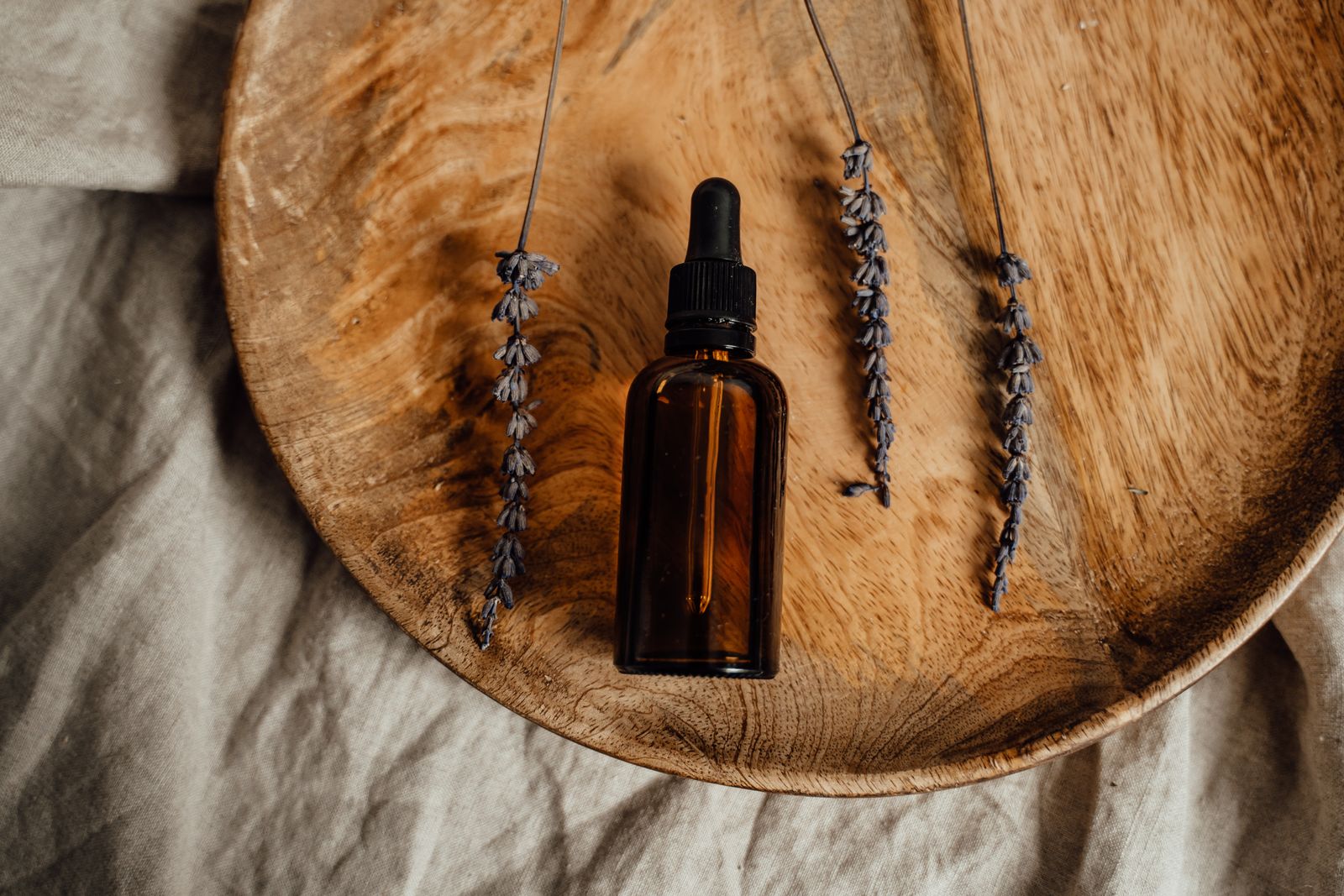
What it buys. A bottle of jojoba or rosehip carrier oil ($8–$15 for an ounce) and a common, genuinely inexpensive essential oil — tea tree and lavender are the honest examples, typically $10–$20 an ounce for tea tree — plus a dark glass bottle to blend in. Rosehip deserves a note because it is so often mis-sold: cold-pressed rosehip seed oil, the skincare ingredient, runs about $15–$40 for a half to one ounce at premium-organic level, and $8–$12 at mass-market level. True steam-distilled rose essential oil is a different substance entirely and costs over $100 an ounce. A $9 "rose oil" is neither lying exactly nor telling the truth usefully — it is usually a diluted blend, and the label's fine print is where that gets admitted.
What it does not buy. Verification. At this tier there is typically no batch-specific GC/MS report — the gas chromatography/mass spectrometry testing that confirms an oil is what its label claims and nothing else — no organic certification, and no traceability of origin. Prices under about $10 an ounce for oils that are expensive to produce are a recognized red flag for dilution or substitution. Your protections are behavioral instead: buy oils whose production is cheap for honest reasons (abundant plant material, high yields), insist on the botanical name on the label — Melaleuca alternifolia, not just "tea tree" — and patch-test everything.
The budget facial. Professional treatments at this tier mean express formats: 30-minute facials around $55–$60 at independent spas, against $100 for the full hour at the same business. You are buying competent hands, steam, and a proper cleanse — a reasonable purchase, priced like one.
Mid-range: $20–$40 per product, $70–$120 per treatment
This is the tier where the extra money buys identifiable substance, and for most people it is where the comparison should end.
In products, the step up purchases three concrete things. First, testing: brands in this band commonly publish or provide batch GC/MS reports — scan the QR code, read the constituent profile, confirm there is no synthetic spike. Second, formulation done for you: a ready-made facial oil at this price is blended at a stated, skin-appropriate dilution by someone who knows the ceilings, which removes the most common home error (too much oil, in both senses) from your routine. Third, sourcing with paperwork: organic certification, named origin, cold-pressed or steam-distilled extraction stated plainly. The consensus across buying guides is consistent on the arithmetic: a good-quality pure oil or well-formulated facial blend typically costs $15–$40, and the $20–$30 tested, transparently sourced oils are repeatedly identified as the value sweet spot of the whole market.
In treatments, mid-range buys the standard aromatherapy facial: 60 minutes, customized oil selection, cleanse, exfoliation, steam, extractions, massage, and mask. Published spa menus put the band at roughly $70–$120 at mid-range and chain spas, with suburban salons at $75–$150 and small-town menus lower, around $60–$90. One representative menu prices its aromatherapy facial at $100 for the hour, eye treatment $15 more — useful calibration for what "mid-range" includes: a full protocol, not a scented add-on. (When aromatherapy appears as a $10 add-on line on a facial menu, that is exactly what it is: a few drops in the standard products, a pleasant extra, and not an aromatherapy treatment in any meaningful sense.)
Premium: $50–$300+, and what is actually in the price
In products, premium money buys rarity first. Some plant materials are intrinsically expensive: rose otto requires enormous volumes of petals, which is why the true oil exceeds $100 an ounce, and why jasmine, sandalwood, and neroli sit in the same bracket — a $5 vial of "neroli" is a mathematical impossibility as the genuine article. Premium also buys single-origin traceability, certified-organic and ethically wildcrafted supply chains (organic Chilean rosehip at $25–$40 against $8–$12 mass-market is the clean example), CO2 extraction, and small-batch freshness. These are real attributes. What they are not is a guarantee of better skin outcomes: a tested $25 oil used at the right dilution will outperform a $90 oil used neat and wrong, every time, because dilution errors and phototoxic burns do not check receipts.
In treatments, premium buys time, setting, and seniority: 75- to 120-minute protocols at $150–$300 in luxury and resort spas — one high-end menu runs its aromatherapy service from $150 for the hour to $250 for two hours, its signature facials at $175–$195. What the extra hour contains is more massage, more mask time, better rooms, and a more experienced esthetician's assessment of your skin. Those are genuine goods. They are hospitality and attention goods, layered on the same essential oils the mid-range facial uses — the oils in a facial, at correct dilutions, cost the spa very little per treatment at any tier.
| Tier | Home products | What the step up buys | Professional treatment |
|---|---|---|---|
| Budget | Carrier oil $8–$15/oz; common oils $10–$20; starter total ~$25–$60 | Honest basics; no lab verification; label-reading is your quality control | Express 30-min facial ~$55–$60 |
| Mid-range | Tested facial oils and blends $20–$40 | Batch GC/MS reports, correct stated dilutions, certified sourcing | 60-min aromatherapy facial $70–$120 |
| Premium | Rare oils $50–$100+/oz (true rose otto $100+); traceable organic carriers $25–$40 | Rarity, origin, certification, freshness — not immunity from the safety rules | 75–120 min luxury facial $150–$300 |
How to spend, tier by tier
At budget level, spend on the carrier and the education, not on variety: one good carrier, one versatile oil with a botanical name on the label, and the dilution chart learned properly will carry a year of practice. Ten cheap oils is a worse purchase than two honest ones.
At mid-range, spend on verification: the GC/MS report is the single most valuable document in this market, and a brand that publishes it batch by batch has done the thing that separates product from perfume. In treatments, this tier's full-hour facial is the benchmark purchase — everything below it is a shorter version, everything above it is a longer and plusher one.
At premium, spend only on what you can name: a specific rare oil you have already used in dilution and loved, a specific esthetician whose assessment you trust, a specific occasion. Premium pricing justified by adjectives — "clinical," "medical-grade," "therapeutic-grade," none of which are regulated grades in this category — is the theatre end of the market, and it is priced accordingly.
The through-line of all three budgets is unfashionable but reliable: in aromatherapy skin care, money buys verification, rarity, time, and comfort, in roughly that order of value. It does not buy stronger permission to ignore the drop counts. Buy the tier whose paperwork you can read, dilute like the safety literature is watching — it is — and the category delivers what it honestly can: pleasurable, gentle, well-scented care for skin that was mostly asking for exactly that.
Sources
- Aromahead Institute, "Essential Oil Dilution Chart" — facial dilution 0.5–1%, body 2%, oil-specific maximums from Tisserand & Young, phototoxic citrus limits — https://aromahead.com/essential-oil-dilution-chart
- Plantin buying guides, "How to Choose Wild Rose Essential Oil" and "How to Choose Turmeric Oil" — rosehip oil $15–$40 premium organic vs $8–$12 mass market; true rose oil $100+/oz; GC/MS verification and price red flags — https://plantin.alibaba.com/buyingguides/wild-rose-essential-oil
- Beacleaner, "9 Best Essential Oil For Face" — typical quality facial oil pricing $15–$40; tea tree $10–$20/oz — https://www.beacleaner.com/best-essential-oil-for-face
- Deep Aromatherapy, "How Much Do Aromatherapy Facials Cost" — mid-range/chain $70–$120, urban $100–$200, luxury $150–$300 — https://www.deeparomatherapy.com/how-much-do-aromatherapy-facials-cost/
- Tantra Spa, "Services" — aromatherapy facial, 60 minutes, $100 — https://www.tantra-spa.com/services
- Photo by Alesia Kozik — https://www.pexels.com/photo/7795817/
- Photo by MART PRODUCTION — https://www.pexels.com/photo/8076105/
More guides
- How to Choose an Alternative Medicine Practitioner You Can TrustAlternative Medicine › Alternative Medicine
- What Alternative Medicine Actually Costs: A Realistic Price GuideAlternative Medicine › Alternative Medicine
- 10 Questions to Ask Before Your First Alternative Medicine AppointmentAlternative Medicine › Alternative Medicine
- Red Flags: When an Alternative Practitioner Is Selling, Not TreatingAlternative Medicine › Alternative Medicine
- How to Buy Natural Healing Products Without Wasting MoneyAlternative Medicine › Natural Healing Products & Services
- All Guides & ArticlesBrowse the full guides library