Alternative Medicine › Massage & Bodywork
After Massage and Bodywork: Maintenance, Follow-Up Costs and the Care Nobody Mentions Up Front
Nobody sells you the second massage while you are booking the first. The price on the menu is for one hour on one table, and it looks contained — $75, $90, maybe $130 in a big city. Then you get up off the table feeling looser than you have in months, and at the front desk, or in the last five minutes while you are still face-down, comes the sentence that changes the economics: "For this, I'd really like to see you every week for a while, then we'll maintain it."
That sentence may be good clinical advice. It may also be the start of a $1,500 year you never budgeted for. The two possibilities sound identical, and almost no one explains, up front, what happens after a massage: how sore you might be tomorrow, how long the benefit lasts, how often follow-up is supported by evidence rather than by a membership model, and what maintenance costs once the introductory offer expires. This guide covers that second half of the purchase.
The first 48 hours: what your body does next
The most common surprise after bodywork is soreness, and it catches people out because they paid to feel better.
Mild soreness after a massage is normal, particularly after deep tissue work, after a long gap between sessions, or when a therapist works an area your body is not used to having worked. It resembles delayed onset muscle soreness — the same dull, diffuse tenderness you get a day after an unfamiliar workout. The usual pattern is predictable: it builds over the first 6 to 12 hours, peaks somewhere in the 24-to-48-hour window, and is mostly gone by day three. It should feel like tenderness when you press on the area or get up out of a chair, and you should be able to trace it to the places that were actually worked.
What it is not is a sign that the session "worked." A massage can help without leaving you sore at all, and a very sore day after is not extra credit — it usually just means the pressure was new, deep, or both. If a therapist tells you soreness proves toxins were released, be skeptical. Lactate clears from the bloodstream within about an hour of the activity that produced it; soreness that arrives the next morning is a tissue repair response, not a detox event, and no amount of expensive bottled water changes that timeline.
The aftercare that actually helps in those first two days is unglamorous and mostly free:
- Gentle movement, not bed rest. Walk, stretch lightly, move the worked areas through their normal range. Stiffness feeds on stillness.
- Heat or cold, whichever you prefer. There is no strong evidence one beats the other for post-massage tenderness; comfort is a reasonable guide.
- Normal hydration. Drink when you are thirsty. You do not need to flush anything, because there is nothing to flush.
- A quiet day for the worked area. Postpone the heavy workout or the yard project by a day if you are tender. That is not fragility; it is sequencing.
- Note what happened. One line in your phone — where you are sore, how strong, when it faded — is the single most useful piece of information you can bring to a follow-up visit, and almost nobody brings it.
Know the lines that are not normal. Sharp, stabbing or burning pain rather than a dull ache; soreness that is still going strong after 72 hours or getting worse after day two; significant swelling or bruising; numbness, tingling or weakness; or unusually dark urine. Those are not "deep work." Those are reasons to contact the therapist promptly and, for the neurological symptoms or dark urine, a clinician the same day.

How long the benefit lasts, honestly
Here is the finding the industry does not put on the brochure: for pain, the benefits of massage in the research are mainly short-term, and they fade.
The clearest illustration comes from a 2011 trial in the Annals of Internal Medicine, in which 401 adults with chronic low back pain received a one-hour massage once a week for ten weeks. Both relaxation massage and more technical structural massage improved pain and function more than usual care at ten weeks, and the improvement in function was still measurable at six months. By one year, it was no longer significant.
A 2014 dosing trial for chronic neck pain, published in the Annals of Family Medicine, makes the second point: dose matters, and not in the direction of "a little, occasionally." Among 228 adults, 60-minute sessions two or three times a week for four weeks produced meaningful improvement; 30-minute sessions did no better than a wait list at any frequency. A 2024 Cochrane review of massage for neck pain rated the overall evidence low certainty, while finding, in a subgroup analysis, a clinically important difference favoring a higher dose — eight or more sessions over four weeks.
Read those three together and the honest picture is this: massage behaves less like a repair you complete and more like exercise — a concentrated course can change a painful area, the gains persist for a while after you stop, and then they erode. That is not an argument against massage. It is an argument for buying it with open eyes: you are not purchasing a permanent fix in installments. You are purchasing a period of better function, and maintenance is the price of extending it.
For stress and general well-being, the evidence base is thinner still — no trial establishes a maintenance interval for relaxation. The familiar "once a month" rhythm is a practical convention, and it is also, not coincidentally, the unit the national chains build their memberships around. Monthly may suit you perfectly. Just know it comes from a billing model, not from a study.
What follow-up actually looks like, goal by goal
A defensible follow-up plan borrows its shape from the trials: front-load, then taper, then reassess. If your therapist's plan has no taper and no reassessment date, it is not a plan; it is a subscription with hands.
For a specific pain problem — a chronic neck, back or shoulder. The research pattern is a block of 60-minute sessions, weekly or more often, for four to ten weeks, followed by spacing out as the improvement holds between visits. A reasonable real-world version: weekly for four to six weeks, then every two weeks, then every three to four weeks if the gains are holding. The test for spacing out is simple — are you still better on the day before the next session than you were the day before the last one? When the answer becomes yes, the interval can grow. When progress stalls across three or four sessions, that is information too, and it should trigger a conversation about changing approach or getting the problem assessed by a clinician, not a quiet doubling-down on the same hour forever.
For training and athletic recovery. Every one to two weeks during heavy training blocks is a common pattern, adjusted around events — lighter or no deep work in the last couple of days before a competition.
For stress and general upkeep. Every three to six weeks is the range most therapists cite, and within it, your budget is as legitimate as any clinical argument. A monthly session you keep all year helps more than an ambitious schedule you abandon in March.
What should not drive the schedule is soreness, which sets a floor of a few days and nothing more. And a plan that escalates without a stated reason and a review date deserves a direct question: what will we measure, and when will we decide whether this is working?
The real money: what maintenance costs over a year
Single-session prices in the United States generally run $50 to $150 an hour, with many people paying around $75 for a standard 60-minute session; 30-minute sessions run roughly $30 to $65 and 90-minute sessions $90 to $175, with specialty work such as hot stone at the upper end and luxury spas well above it. Those are the numbers everyone quotes. Maintenance is a multiplication problem, so do the multiplication before you commit:
| Pattern | Sessions a year | At $75/session | At $110/session |
|---|---|---|---|
| Monthly maintenance | 12 | $900 | $1,320 |
| Every two weeks | 26 | $1,950 | $2,860 |
| Weekly course, 10 weeks, then monthly | 19 | $1,425 | $2,090 |
| Weekly, ongoing | 52 | $3,900 | $5,720 |
Add the costs that never appear in the headline rate: a tip of 15 to 20 percent where tipping is customary takes that $900 monthly-maintenance year to roughly $1,035 to $1,080; add-ons such as hot stones, aromatherapy or enhanced muscle therapy typically add $10 to $30 a session; and a same-week rebooking you did not plan, booked while you were still relaxed on the table, is a cost too — it just arrives disguised as enthusiasm.
Memberships change the shape of the bill rather than abolishing it. At the largest national chain, Massage Envy, membership is set by the local franchise — recent franchise figures and member reports put it around $70 to $90 a month, on an initial 12-month term, covering one 60-minute session a month (about 50 minutes of hands-on time), with additional sessions at member rates. Twelve payments total $840 to $1,080 before tips and enhancements. Unused sessions roll over while the membership is active, but under the chain's terms accrued sessions are forfeited if not used within 60 days after cancellation, and same-day cancellations can cost half the scheduled service. A membership is good arithmetic if you genuinely go monthly and would pay drop-in rates otherwise. It is bad arithmetic if the contract outlives your motivation, because the meter runs whether you lie on the table or not.
Packages and series — five or ten sessions prepaid at a discount — sit between the two. The discount is real, commonly in the range of 10 to 20 percent, but you are lending the business money and taking on its risks: if the practice closes, moves or loses the therapist you liked, prepaid sessions can be hard to recover. Buy a series from an established practice, keep it small, and get the expiry date and refund terms in writing.
Insurance, HSA and FSA money is narrower than the front desk may imply. Most health plans do not list massage as a covered benefit, and Medicare does not cover massage therapy. An HSA or FSA can often pay when the massage treats a diagnosed condition and you have a letter of medical necessity from your doctor — naming the condition, how massage fits the treatment plan, and the expected number of sessions — plus an itemized receipt. A relaxation session does not qualify however the receipt is worded, and membership dues are not eligible. Get the letter before you book a series, not after, and keep it with the receipts.

The home half of maintenance
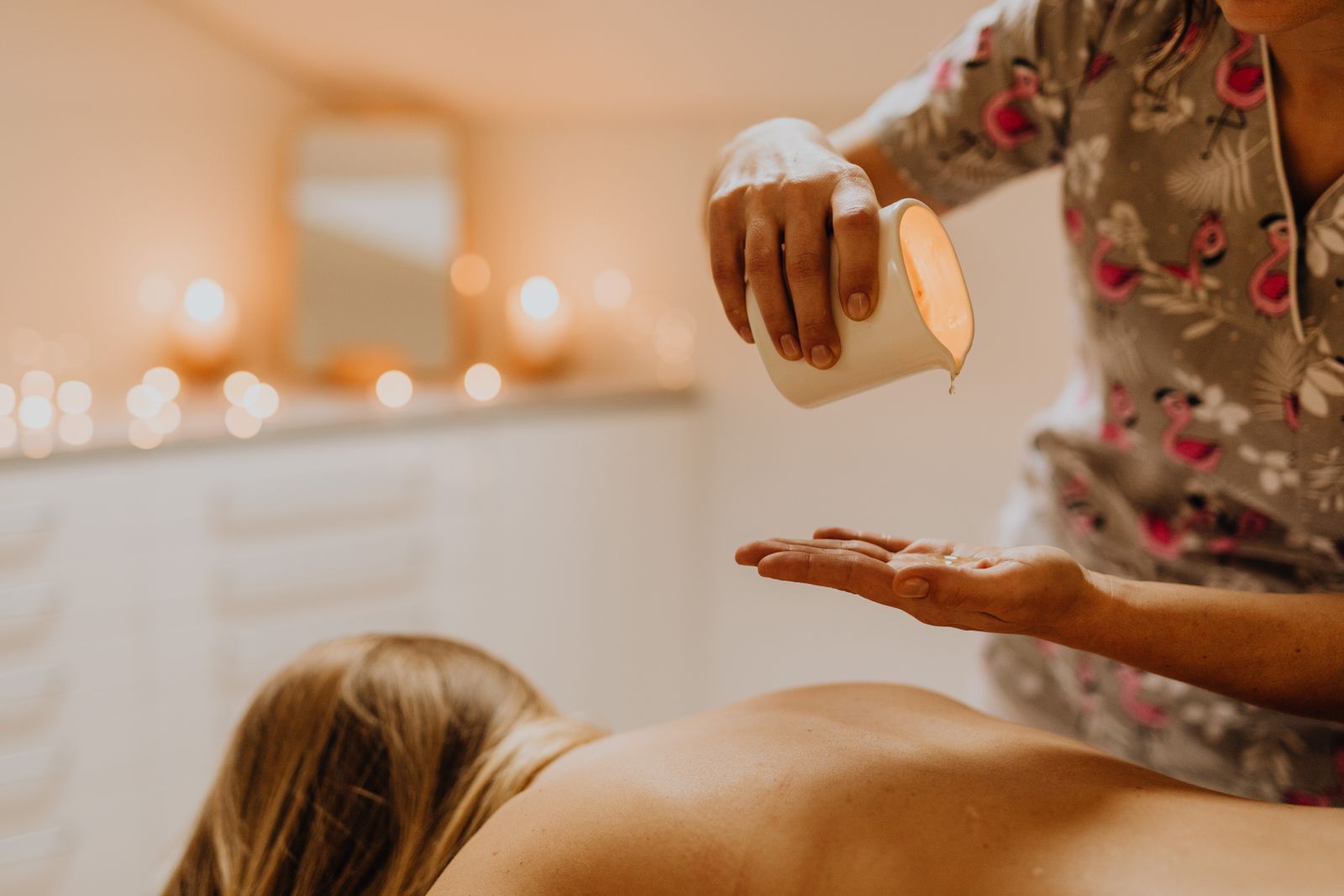
Between sessions, the work that protects your money is mostly free, and a good therapist will teach it rather than guard it: the two or three stretches that address your specific pattern, heat for the desk-tight shoulders, a tennis ball or foam roller used gently on the areas that respond to it, and the ergonomic fix — monitor height, chair, the way you hold your phone — that stops recreating the problem every workday.
Be alert to the pivot where aftercare becomes a second checkout. Oils, balms, rollers, supplements and devices all have their place, but when every follow-up conversation ends with a product, you are no longer only a patient. Ask the disarming question: "If I buy nothing, what would you have me do at home?" A therapist with a real maintenance philosophy answers it easily and in detail. The answer is also a fair test of the follow-up plan itself — care that only exists inside paid sessions is a business model, not a maintenance strategy.
One more cost nobody mentions: time. A weekly hour is closer to two with travel and changing — twenty hours over a ten-week course. That may be worth it for a back that lets you sleep, but it belongs in the calculation.
Questions to ask before you agree to a follow-up plan
- What are we treating, in plain words, and how will we know it is improving?
- How many sessions, how often, and when do we reassess — what date or session number?
- What does the full course cost, including tips and the add-ons you are recommending?
- What happens after the course — what maintenance interval are you proposing, and what would make it shorter or longer?
- What should I be doing at home between sessions, at no cost?
- If I prepay or join a membership, what are the expiry, rollover, cancellation and refund terms, in writing?
- If I use an HSA or FSA, can you provide an itemized receipt, and do I need my doctor's letter first?
Finding the next practitioner, if you need one
Sometimes the honest conclusion of a follow-up plan is that you need a different kind of help — or the same help from someone whose plan has an end date. This site lists 5,637 massage and bodywork listings, alongside 1,702 therapeutic massage listings, so the choice is rarely scarce; the discipline is in the choosing. Look for a practitioner who talks about maintenance the way this guide has: a block, a taper, a reassessment, and home care that costs nothing. The therapist who tells you what happens after — including when to stop — is the one whose follow-up plan you can trust while it lasts.
Sources
- Annals of Internal Medicine, Cherkin et al. 2011 trial of massage for chronic low back pain — 401 adults, 10 weekly one-hour sessions; function improved versus usual care at 10 weeks, still measurable at six months, no longer significant at one year.
- Annals of Family Medicine, Sherman et al. 2014 massage dosing trial for chronic neck pain — 228 adults; 60-minute sessions two or three times a week for four weeks most effective; 30-minute sessions no better than wait list.
- Cochrane review of massage for neck pain, 2024 — overall benefit rated low certainty; subgroup finding favoring eight or more sessions over four weeks.
- Healthline, "Sore After Massage" — post-massage soreness as a normal inflammatory response, typically subsiding within about a day, eased by hydration, gentle stretching and heat or cold.
- Cleveland Clinic guidance on delayed onset muscle soreness, via practitioner summaries — onset one to three days after unfamiliar stress, from small disruptions in muscle fibers and the repair response.
- ClinicSense pricing data, via Blys — massage in the US usually costs $50–$150 an hour; 30-minute sessions $30–$65; 90-minute sessions $90–$175; specialty treatments $85–$150 and up.
- Massage Envy membership terms and franchise pricing reports, via ThePricer — membership around $70–$90 a month by location, initial 12-month term, one 60-minute session monthly, accrued sessions forfeited within 60 days after cancellation.
- IRS Publication 502 and HSA/FSA administrator guidance (HealthEquity, Lively), via practitioner guidance — massage may be HSA/FSA eligible with a letter of medical necessity for a diagnosed condition; membership dues are not eligible.
- Photo by Anna Tarazevich, https://www.pexels.com/photo/6560289/
- Photo by Karolina (Kaboompics), https://www.pexels.com/photo/6629614/
- Photo by Tima Miroshnichenko, https://www.pexels.com/photo/6187290/
More guides
- How to Choose an Alternative Medicine Practitioner You Can TrustAlternative Medicine › Alternative Medicine
- What Alternative Medicine Actually Costs: A Realistic Price GuideAlternative Medicine › Alternative Medicine
- 10 Questions to Ask Before Your First Alternative Medicine AppointmentAlternative Medicine › Alternative Medicine
- Red Flags: When an Alternative Practitioner Is Selling, Not TreatingAlternative Medicine › Alternative Medicine
- How to Buy Natural Healing Products Without Wasting MoneyAlternative Medicine › Natural Healing Products & Services
- All Guides & ArticlesBrowse the full guides library